

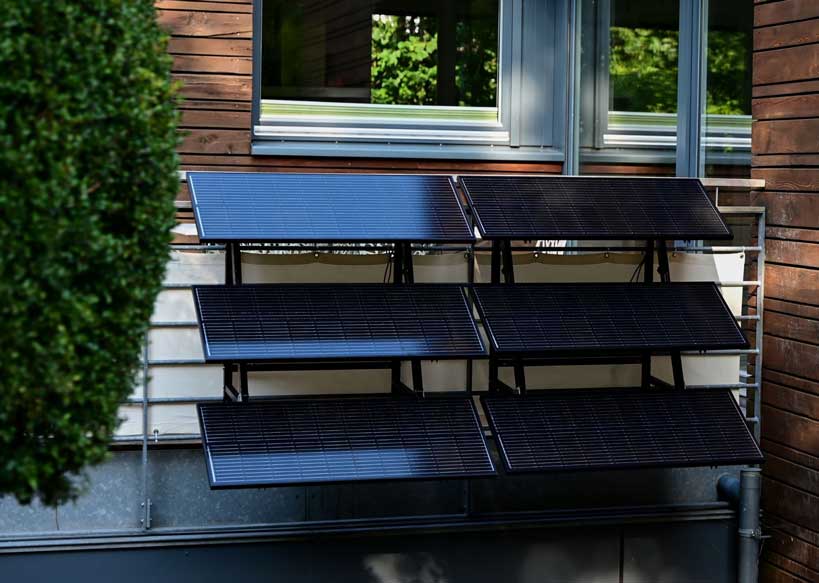
What is meant by a balcony power plant?
Today we're discussing "What is a balcony power plant?" A balcony power plant, also known as a mini solar system , plug-in solar device , or mini PV system , is a compact photovoltaic system specifically designed for use on balconies, terraces, or small spaces. It consists of solar modules , an inverter , and a simple plug-in connection for feeding electricity into the home's electrical grid. Besides these classic models, there are also systems with multiple modules, such as those offered by Moe . These larger systems enable higher electricity production and can be flexibly expanded – whether with two, four, or six modules. This allows them to offer a customized solution for households with varying energy needs and available space. The idea behind a balcony power plant is to provide homeowners and renters with a straightforward way to generate electricity without extensive permitting processes or high investments. These systems can usually be easily installed on or attached to your balcony, which is a real advantage over large PV systems.

By directly using the solar power generated, households can reduce their energy consumption and save on electricity costs in the long term. This is particularly interesting in times of rising electricity prices and growing demand for sustainable energy solutions. Furthermore, a balcony power plant contributes to reducing CO2 emissions by promoting the use of renewable energies.
Differences between balcony power plants and conventional photovoltaic systems
Balcony power plants differ from classic photovoltaic systems in several aspects:
-
Output: A balcony power plant typically delivers between 600 and 800 watts , while a conventional rooftop PV system can generate several kilowatts. The 800-watt limit is for regulatory reasons and allows for simplified registration and use without special permits. In addition to these higher-powered models, there are also smaller systems that operate at lower output. These are particularly suitable for households with limited space or lower energy needs. Such systems can provide a significant contribution to reducing electricity costs, even with just 300 to 500 watts.
-
Feed-in: While a large solar power system often feeds electricity into the public grid and receives a feed-in tariff, a balcony power plant primarily serves the direct use of the generated electricity in the home . This means that household appliances consume the solar power directly before drawing on electricity from the grid. Those interested in the possibility of a feed-in tariff can find further information in our separate article on feed-in tariffs. Additionally, there is the option of storing the generated electricity using a storage system, allowing it to be used at a later time. This can significantly increase the self-consumption rate and further enhance independence from the electricity grid.
- Installation: A balcony power plant is easier to install and can often be put into operation without professional assistance. Our systems offer extremely simple assembly , so even people without technical knowledge can install them without any problems. All that's needed is a suitable electrical outlet to feed the generated electricity into the home's electrical grid . Furthermore, the double tilt angle of the mounting bracket and solar panels ensures optimal solar radiation capture. This guarantees that the balcony power plant always achieves maximum yield. In contrast, a traditional solar system requires professional installation and extensive wiring.

How does a balcony power plant work?
A balcony power plant works by converting sunlight, i.e., solar energy, into electrical energy. This process is fascinating, and we'll briefly explain how such a mini photovoltaic system can generate electricity. The most important steps in this process are:
-
Solar energy generation: PV modules capture sunlight and generate direct current (DC ). This process occurs through the photovoltaic effect , in which sunlight strikes the solar cells and sets electrons in motion. Solar modules consist of photovoltaic cells, usually made of silicon. When sunlight hits these cells, they absorb the energy of the photons. This energy absorption causes electrons to be released from the atoms in the semiconductor material and begin to move. Within the solar cell, there is a special pn layer that directs the released electrons in a specific direction. This creates an electrical voltage between the two layers. When a circuit is closed by connecting the solar cell to a load or the inverter, the electrons flow through this circuit – generating direct current (DC). The quality and efficiency of the modules play a crucial role here. High-quality solar modules with high light sensitivity can generate energy even in weak sunlight.
-
Conversion to alternating current: Since household appliances operate on alternating current , the generated direct current is converted into alternating current . This is done by the inverter , which plays a central role in the system. Modern inverters achieve an efficiency of up to 98% , resulting in minimal energy loss. Particularly intelligent inverters can optimize the power flow and help maximize self-consumption.
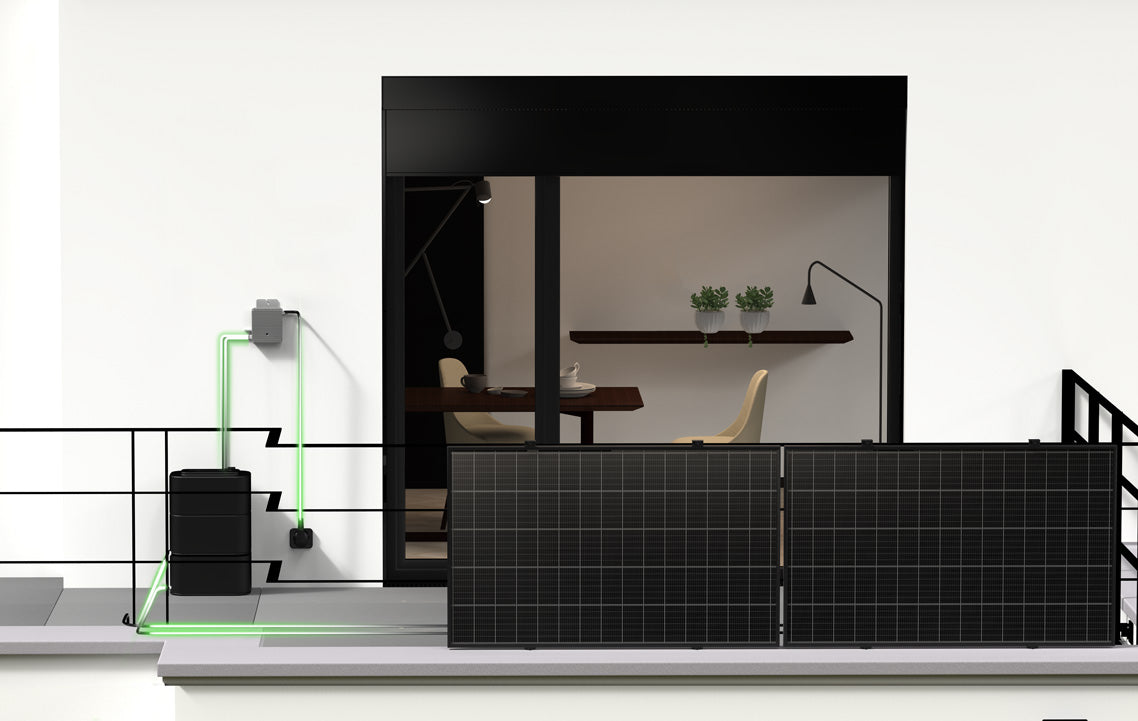
- Feeding electricity into the home grid: Electricity is fed directly into the home grid via a standard wall socket (Schuko or Wieland socket) and consumed by connected devices. Consumption is prioritized, so that self-generated solar power is used first before drawing additional electricity from the grid. This reduces electricity costs and increases self-consumption. Feed-in tariffs for electricity fed into the public grid are also possible under certain conditions. You can read here whether this is worthwhile. Feeding in electricity and meeting your electricity needs can be further optimized by using a battery storage system. We will soon be offering a great additional storage solution .
The most important components of a balcony power plant
Solar modules and their role
Solar modules are the heart of a mini solar power system. They consist of photovoltaic cells that convert sunlight into electrical energy . There are various module types that differ in their efficiency and durability :
-
Monocrystalline modules: These modules have a particularly high efficiency because they consist of pure silicon crystals . They operate especially efficiently in direct sunlight and have a longer lifespan.
- Polycrystalline modules: These modules consist of several interconnected silicon crystals . They are less expensive than monocrystalline modules, but have a slightly lower efficiency. Nevertheless, they are a popular choice for many households.
Inverter – The heart of the system
The inverter plays a crucial role in mini PV systems. It ensures that the generated direct current (DC) is converted into alternating current (AC) so that it can be used for household appliances. Modern inverters have an efficiency of up to 98% , minimizing energy loss. A high-quality inverter not only guarantees a stable feed-in of electricity to the home grid but can also be combined with intelligent control systems to further optimize self-consumption.

Plug for solar device and connection options
Depending on the model, there are different connection options for a plug-in solar device:
Schuko plug: The Schuko plug (protective contact plug) is a common electrical connection in Germany and many other European countries, allowing for easy connection to a standard wall socket. It enables the quick commissioning of a balcony power plant without special electrical installations or modifications to the house's electrical system. However, it's important to note that the Schuko plug was not specifically designed for feeding electricity into the household electrical grid. Overloading the circuit can lead to safety risks, especially if several high-power appliances are operated simultaneously on the same circuit. Network operators therefore often recommend using a Wieland plug, which offers greater safety through special locking mechanisms.

Wieland connector: The Wieland connector is a special connection method for balcony power plants, recommended by many grid operators because it offers greater safety than conventional Schuko plugs. Unlike a Schuko plug, the Wieland connector has an additional protective mechanism that prevents uncontrolled backflow of electrical current into the grid. This minimizes the risk of electrical accidents or overloads. However, installing a Wieland connector requires a qualified electrician to verify proper installation. In some cases, grid operators may even mandate such installation to ensure the safety of the building's electrical system.
What level of performance is possible?
A balcony power plant is currently limited to a maximum of 800 watts , as this is the maximum output permitted for simplified registration. This limit was set to make operating plug-in solar systems as simple and accessible as possible. This is due to the Solar Package 1 , which introduced important legal changes to facilitate the use of these systems for households. This regulation ensures that balcony power plants can be used without complicated permitting procedures. Furthermore, solutions with higher outputs or modularly expandable systems with additional solar panels are now available. Another way to increase self-consumption is through the use of energy storage systems , which can store excess energy for later use.
Performance of a mini solar power system in practice
The actual output of a balcony power plant depends on several factors and can vary significantly depending on the conditions. Efficient power generation is crucial for the system's economic viability. Therefore, the following aspects should be given particular consideration:
- Location and orientation: One A balcony solar power system on a south-facing balcony can capture more solar energy than a module on a north-facing balcony. Optimal orientation is a crucial factor for the system's efficiency, as solar irradiance varies significantly depending on the direction of the balcony. While a south-facing balcony is considered ideal, an east- or west-facing balcony can also yield good results if the solar irradiance is distributed throughout the day. Furthermore, the tilt angle of the modules plays a key role. A well-adjusted tilt angle can significantly increase the yield, especially when combined with a flexible mounting system that allows for optimal sun exposure. More information on the optimal orientation of balcony solar power systems can be found in our blog article on balcony solar power system orientation.

-
Solar radiation: Depending on the region and season , solar power generation can vary. In summer, yields are significantly higher than in winter, as solar radiation is more intense and the days are longer. In winter, however, the lower sun altitude and more frequent cloud cover can considerably reduce energy production. Nevertheless, there are ways to optimize the efficiency of a balcony solar power system even in the winter months. Correctly orienting the modules can help ensure sufficient power generation even in weaker light. Additionally, modern modules with higher light sensitivity can help produce a certain amount of electricity even in diffuse light. Those who would like to learn more about power generation in winter will find further valuable tips and information in our blog article on solar power production in winter.
- Shading: If the module is obscured by trees or buildings, electricity generation can be significantly reduced. Shadows on the solar modules cause individual cells or entire sections of the module to operate suboptimally. This considerably lowers the overall output of the balcony power plant. This is particularly problematic if the module is shaded by buildings or plants in the morning or evening hours, as this shortens the window of maximum sunlight exposure. Proper module placement and the use of micro-inverters can help minimize the yield loss due to shading. For more information on how shading affects electricity production and what measures can help, see our blog article on the optimal orientation of balcony power plants.
An 800-watt balcony power plant can generate approximately 300 to 600 kWh of solar power annually, which can correspond to electricity savings of up to 200 euros per year – depending on the current electricity price.
Installation of a balcony power plant
Step-by-step installation instructions
- Choose a suitable location (balcony, terrace, flat roof) with optimal sun exposure.
- Securely fasten solar panels to withstand wind loads and achieve the best yield.
- Connect the inverter and check that it is functioning correctly.
- Plug the connector into the socket – the generated electricity can be used immediately.
- Registration with the Market Master Data Register (MaStR): register
Registration and legal requirements in Germany

Is registration required?
Since 2024, the legal regulations for mini solar power systems have been significantly simplified. Nevertheless, there are still requirements that operators of balcony power plants must observe. Registration with the grid operator and in the market master data register of the Federal Network Agency remains necessary in many cases to ensure correct registration of the feed-in to the house's electrical system and, if applicable, to the public grid .
The new legal adjustments, however, allow balcony power plants up to 800 watts to be operated more easily, without requiring extensive permits. A planned increase in the maximum permitted output could encourage even more households to use their own PV systems in the form of plug-in solar panels in the future. Further details on the current regulations and upcoming changes can be found in our article on the legal status of balcony power plants.
Important points regarding registration:
To ensure the registration of a balcony power plant runs smoothly, some important documents and information are required:
Personal data: Name, address and contact details of the plant operator.
Technical specifications of the system:
- Manufacturer and model of the solar modules and inverter .
- Total power output of the mini solar system in watts.
- Number of installed solar panels .
Commissioning date: The date on which the balcony power plant was put into operation.
Market Master Data Register (MaStR) registration:
- Registration of the plant within one month of commissioning on the website of the Federal Network Agency .
- Free listing for the registration of PV systems .
Proof of a compliant inverter: Some network operators require proof of an inverter that limits the feed-in power.
Electricity meter with backstop: If an old meter without a backstop is present, the network operator may require it to be replaced.
Landlord's permission: If you are a tenant , you should clarify with your landlord or property management company before installation whether structural alterations are permitted. However, this only applies in cases where structural alterations are made; if this is not the case, no permission is legally required.
Further details on the current regulations and upcoming changes can be found in our article on the legal situation of balcony power plants.
What happens if there is an incorrect registration or no registration at all?
Failure to register a balcony power plant in the market master data register of the Federal Network Agency constitutes an administrative offense under Section 95 of the Energy Industry Act (EnWG), which can theoretically be punished with a fine of up to 50,000 euros.
In practice, however, the penalties are usually significantly lower and often range from 20 to 500 euros, depending on factors such as the duration of the unregistered operation and the severity of the violation.
Cost of a balcony power plant
In this article, we'll show you how much a balcony power plant costs and the purchase price.
Frequently Asked Questions
How does the feed-in to the grid work?
The generated electricity is fed into the home's own electrical system . If more electricity is generated than can be consumed, it flows into the public grid .
Can I be independent of the power grid with a balcony power plant?
No, balcony power plants are not designed for self-sufficient power supply , as they have a limited output.
What conditions must be met for use?
- Space for the modules
- Sunlight
- Connection options (Schuko or Wieland)
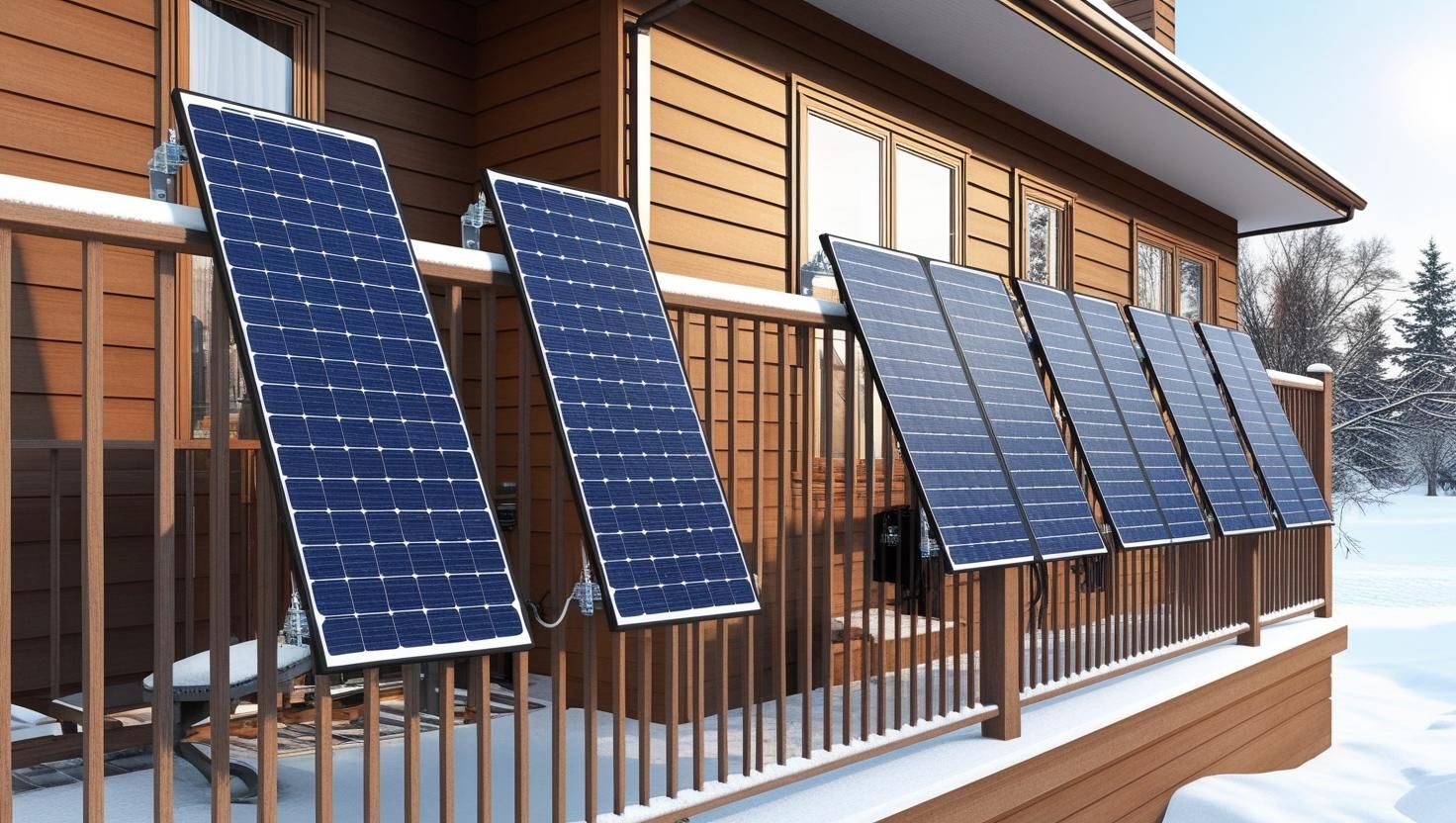

Leave a comment
This site is protected by hCaptcha and the hCaptcha Privacy Policy and Terms of Service apply.