

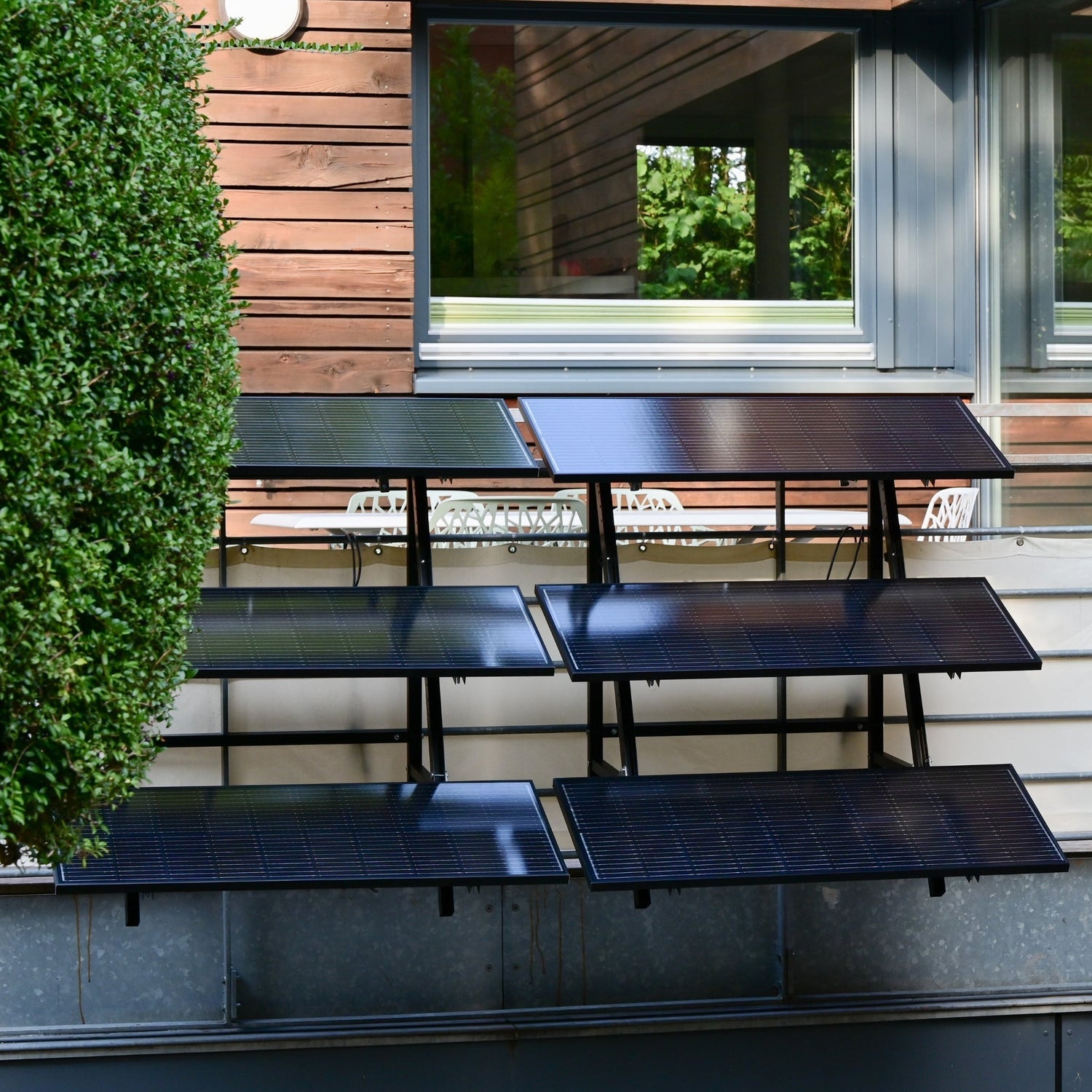
Why is a balcony power plant worthwhile?
Electricity costs are constantly rising, and many households are looking for ways to reduce their energy bills. Mini solar systems, also known as balcony power plants, are a popular solution. These compact systems allow you to produce your own solar power and thus supply your household with electricity more cheaply. But is a balcony power plant really worth it? And above all: What does a balcony power plant cost? In this article, we'll explain the purchase costs, running costs, and potential savings.
The cost of purchasing such mini solar systems can vary.
Price ranges for various balcony power plants
The investment in a balcony solar system varies depending on the model and features. Entry-level models with a capacity of 600 watts start at around €350, depending on quality. These offer basic equipment with simple modules and an inverter. For more powerful 800-watt systems, you should expect to pay between €600 and €900. Those who want to get even more out of their balcony power plant can invest in a version with a battery storage system, which is significantly more expensive at around €1,200 to €2,000, but the storage option opens up further usage possibilities.
Our well-designed models are available as a set (without storage) starting at just €329.00 . A 775-watt version is available for €769.00. Use our configurator to customize your balcony power plant to your exact specifications. Simply order, wait for delivery, and connect it. Convenient delivery and plug-and-play installation.

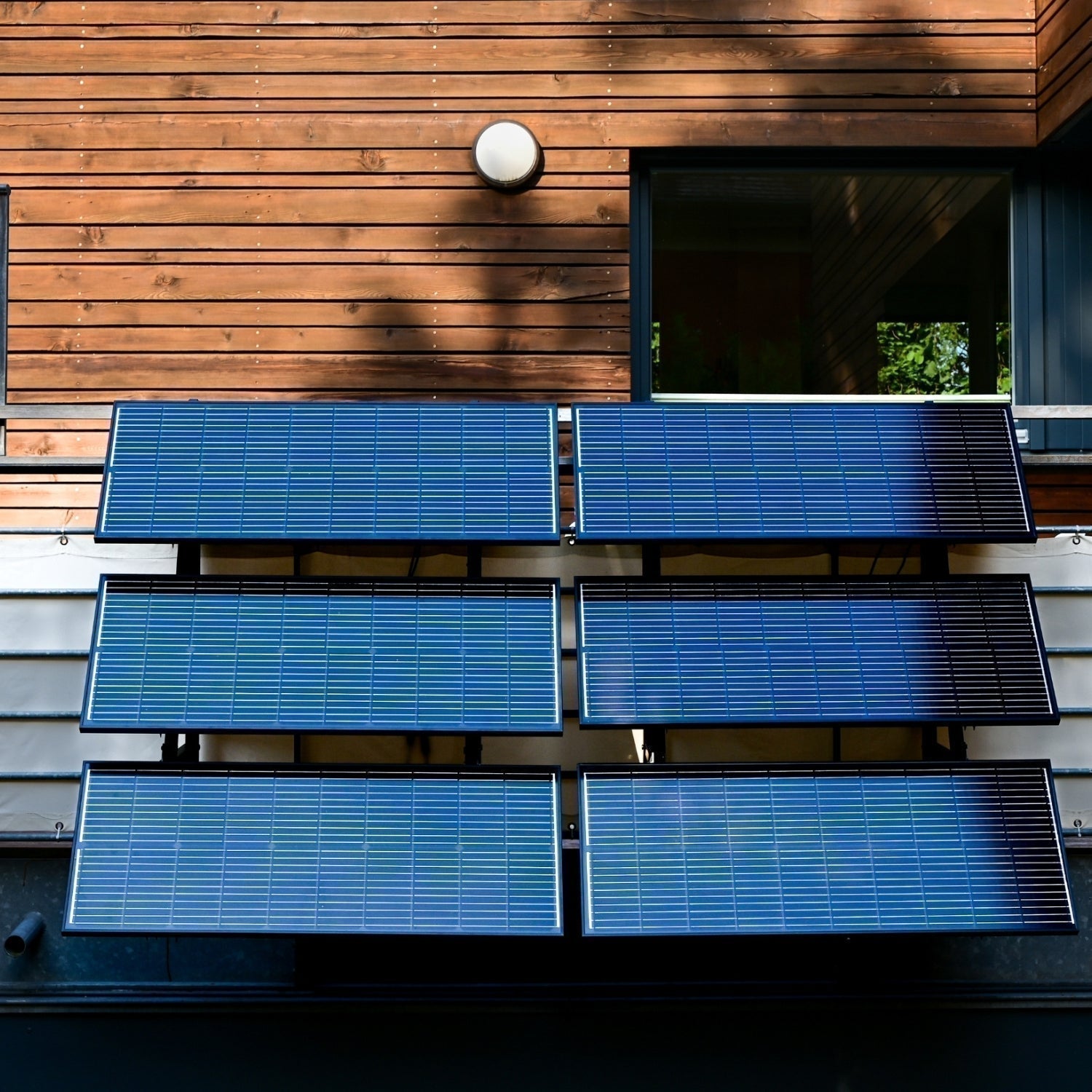
MOECELL solar systems, due to their adjustable features, achieve a higher yield than typical mini solar systems, are ready for immediate connection, the individual modules can be adjusted to different angles, and you can easily retrofit them with additional modules if needed.
Which components influence the purchase price?
- Photovoltaic modules : Solar modules are the central element of a balcony power plant. They convert sunlight into solar electricity. High-quality PV modules have a higher efficiency, which allows for more electricity to be produced per year. Durability also plays a role: While inexpensive modules often have a lifespan of about 15 to 20 years, premium modules can last 25 years or more, increasing long-term profitability.
- Inverter : The inverter's function is to convert the direct current (DC) generated by the solar panels into alternating current (AC) so that it can be used in the household. Modern inverters are often equipped with intelligent features that maximize solar power yield by determining the optimal operating range for the panels. Furthermore, the inverter's efficiency influences how much solar power can actually be used. High-quality models offer efficiencies of up to 98%, which further reduces electricity costs.

- Mounting system : Installing a balcony solar system depends heavily on the structural conditions. Those with a balcony featuring a suitable railing can usually use simple mounting systems. For facade or garden installations, special frames or tilt-angle brackets are required to optimize energy yield. Proper installation can significantly increase the solar system's performance, especially when the solar panels are optimally aligned with the sun. We prioritize flexibility. With us, not only is the number of systems flexible, but the width of the mounting bracket can also be individually adjusted between 62 cm and 96 cm.
- Standard wall socket or special feed-in devices: There are two main options for connecting plug-in solar systems to the grid: using a standard wall socket and plug, or connecting via a special feed-in device. The standard wall socket (protective contact socket) allows for easy installation without major modifications, as it is already common in Europe. However, the maximum feed-in power is limited in this case. Alternatively, a feed-in device or a special Wieland socket can be used, which offers higher safety standards and is sometimes required by grid operators. This solution may involve higher installation costs, but ensures optimized and safe feed-in of the generated electricity into the household grid with a plug-in solar device.
- Storage (optional) : A storage system can absorb excess solar power and release it later when the sun isn't shining. This increases self-consumption and reduces reliance on electricity from the public grid. Households with high electricity consumption in the evenings particularly benefit from this technology. However, a storage system significantly increases the initial investment, so a cost-benefit analysis is advisable before making this decision.
We'll soon be offering a storage solution. It's the perfect complement to our balcony power plant; you can take a look at it now. If you don't want to miss any new information, subscribe to our newsletter and stay up to date.

Funding and financial benefits for balcony power plants – What support is available?
Several cities and states offer subsidy programs for mini-PV systems. These grants can range from €100 to €500, depending on the region, and help reduce the purchase costs of a balcony power plant. This can be a particularly attractive option for renters living in apartments with balconies, allowing them to invest in a sustainable energy source.
In addition, government programs or regional initiatives can offer further financial incentives. Tax breaks or reduced VAT rates can further lower investment costs. Many energy suppliers also offer special tariffs or rebates when households feed their self-generated solar power into the public grid.
Tax advantages
Since 2023, operators of balcony power plants have benefited from significant tax breaks. Purchases are exempt from VAT, eliminating the 19% sales tax and thus considerably reducing acquisition costs. Furthermore, income tax is waived on revenue from feeding electricity into the public grid, minimizing bureaucratic effort. Private operators do not need to register a business. Additionally, under certain conditions, installation costs can be claimed as tax deductions. These tax advantages further shorten the amortization period and make balcony power plants an even more attractive investment. Comparison by performance and features
Ongoing costs and potential savings for a balcony solar system
Maintenance and operating costs
Operating such a balcony solar system may incur ongoing or one-time additional costs. Here are a few examples:
- Regular cleaning of the modules : To ensure optimal performance, the solar modules should be regularly cleaned of dust, leaves and dirt.
- Insurance : It can be worthwhile to take out photovoltaic insurance, especially if the system is exposed to wind and weather. The costs are approximately 20 to 50 euros per year.
- Electricity meter adjustment : In some cases, it is necessary to have the electricity meter replaced by the grid operator if it requires a backflow preventer. The one-time costs for this can be up to 100 euros.
Savings through self-generated solar power
A balcony power plant can generate approximately 500–800 kWh per year, depending on its output. At a current electricity price of around 30 cents per kWh, this results in annual savings of €150–240. However, experts anticipate that electricity prices will continue to rise in the coming years. Should the price increase to, for example, 40 cents per kWh, the savings would already be between €200 and €320 per year. This would correspondingly shorten the payback period.
The payback period is therefore usually 3–7 years, depending on individual electricity costs and self-consumption. Future developments in the energy market, such as the introduction of even more efficient photovoltaic modules, new government subsidies, or rising energy prices, could lead to balcony power plants paying for themselves even faster. Given current geopolitical developments and increasing demand for renewable energies, the trend toward decentralized energy generation is expected to continue. Furthermore, technological advances in storage technology could contribute to more efficient use and storage of surplus electricity, further increasing self-consumption and strengthening independence from the public grid. Those who invest early can benefit from these positive developments and further reduce their electricity costs in the long term.
Comparison based on performance and features
600 watts vs. 800 watts – Is more power worth it?
Since 2024, balcony solar power systems with a capacity of 800 watts have been officially permitted in Germany. These more powerful systems offer higher electricity production compared to the previously common 600-watt models, meaning that more solar power can be used directly and less needs to be drawn from the public grid. This can shorten the amortization period. However, 800-watt systems are usually somewhat more expensive to purchase, and it is important to consider whether your household can actually make good use of the higher output. Those with higher self-consumption benefit particularly from the increased capacity, as the system provides more energy that can be used directly.
Which investments are worthwhile for improved efficiency?
- Additional solar panels for better yield: More panels increase the overall output of the system, thus increasing the yield, especially during months with low sunlight. This leads to a better energy supply and faster amortization of the system.
- Higher-power inverter : A more powerful inverter ensures a more efficient conversion of direct current (DC) into usable alternating current (AC). This reduces energy loss and allows more solar power to be used for self-consumption.
- Storage for more efficient use of generated solar power : A power storage system allows excess electricity to be stored and used later. This increases self-consumption and reduces dependence on the public power grid.

Solar Package I – Changes and future developments
There are legal requirements for using balcony solar systems. The Solar Package I , passed by the German Federal Government in 2024, significantly simplified the use of plug-in solar systems and marked an important step in promoting renewable energies. One of the key changes was the increase in the power limit to 800 watts , allowing private households to use more powerful systems. Furthermore, the use of standard Schuko sockets was officially permitted, meaning that balcony power plants can now be connected without complex modifications or special feed-in devices. In addition, bureaucratic hurdles were reduced, simplifying the registration process and accelerating the adoption of this technology.
This reform has significantly impacted the market for balcony power plants, as it has lowered barriers for consumers and made the technology accessible to a wider audience. Since the introduction of the first solar package, there have been ongoing discussions about future adjustments. Among other things, a further increase in the power output limit is being considered to make self-generated electricity even more efficient. Additional government subsidies are also under discussion to increase consumer incentives and further promote the use of mini-solar systems. Developments in this area demonstrate that legislators continue to focus on strengthening decentralized energy sources, and future legislative changes could bring even more benefits to users.
Conclusion – Is a balcony power plant really worth it?
A balcony solar system is a worthwhile investment for anyone who wants to reduce their electricity costs and contribute to the energy transition. Depending on the model, the purchase price ranges from €350 to €2,000, but generating your own solar power can save you up to €240 per year, or even more in the future. Ultimately, you have to decide for yourself whether a balcony solar system is right for you. However, especially if space is limited, it can be a good alternative to larger photovoltaic systems.
FAQs on the topic
How much does a balcony power plant cost and what price differences are there?
The cost of a balcony solar power system varies depending on its output, features, and components. Entry-level models with 600 watts of power are available from around €350, while more powerful 800-watt models cost between €600 and €900. Those opting for a mini-PV system with battery storage should expect to pay between €1,200 and €2,000.
Does a balcony power plant make financial sense?
Yes, a balcony solar power system is worthwhile for many households, especially if a high level of self-consumption of the generated solar power is ensured. Using a plug-in solar system can save up to €240 per year on electricity costs, meaning the investment pays for itself in 3 to 7 years.
What are the running costs of a balcony power plant?
The ongoing operating costs of a balcony power plant are minimal. Besides occasional maintenance and cleaning of the modules (to optimize yield), insurance can be worthwhile, costing approximately 20 to 50 euros per year. In some cases, the electricity meter also needs to be adjusted by the grid operator, which can incur one-time costs of up to 100 euros.
What happens to my balcony power plant during a power outage?
A standard balcony power plant without storage automatically shuts down during a power outage, as it relies on the public grid. However, a balcony power plant with emergency power storage can continue to supply electricity in certain situations if it is equipped with an off-grid inverter.
Is a balcony power plant with storage a sensible option?
A balcony power plant with storage can store excess solar power for later use. This increases self-consumption and can improve independence from the public grid . However, storage solutions are still relatively expensive, so a cost-benefit analysis is worthwhile.
What technical requirements do I need for a balcony power plant?
To operate a balcony solar system, you need a suitable electrical outlet (e.g., Schuko or Wieland), an orientation that receives as much sunlight as possible, and ideally, the option to mount the modules flexibly. A modern inverter also ensures optimal feed-in of the electricity into the home's electrical grid.

Leave a comment
This site is protected by hCaptcha and the hCaptcha Privacy Policy and Terms of Service apply.