

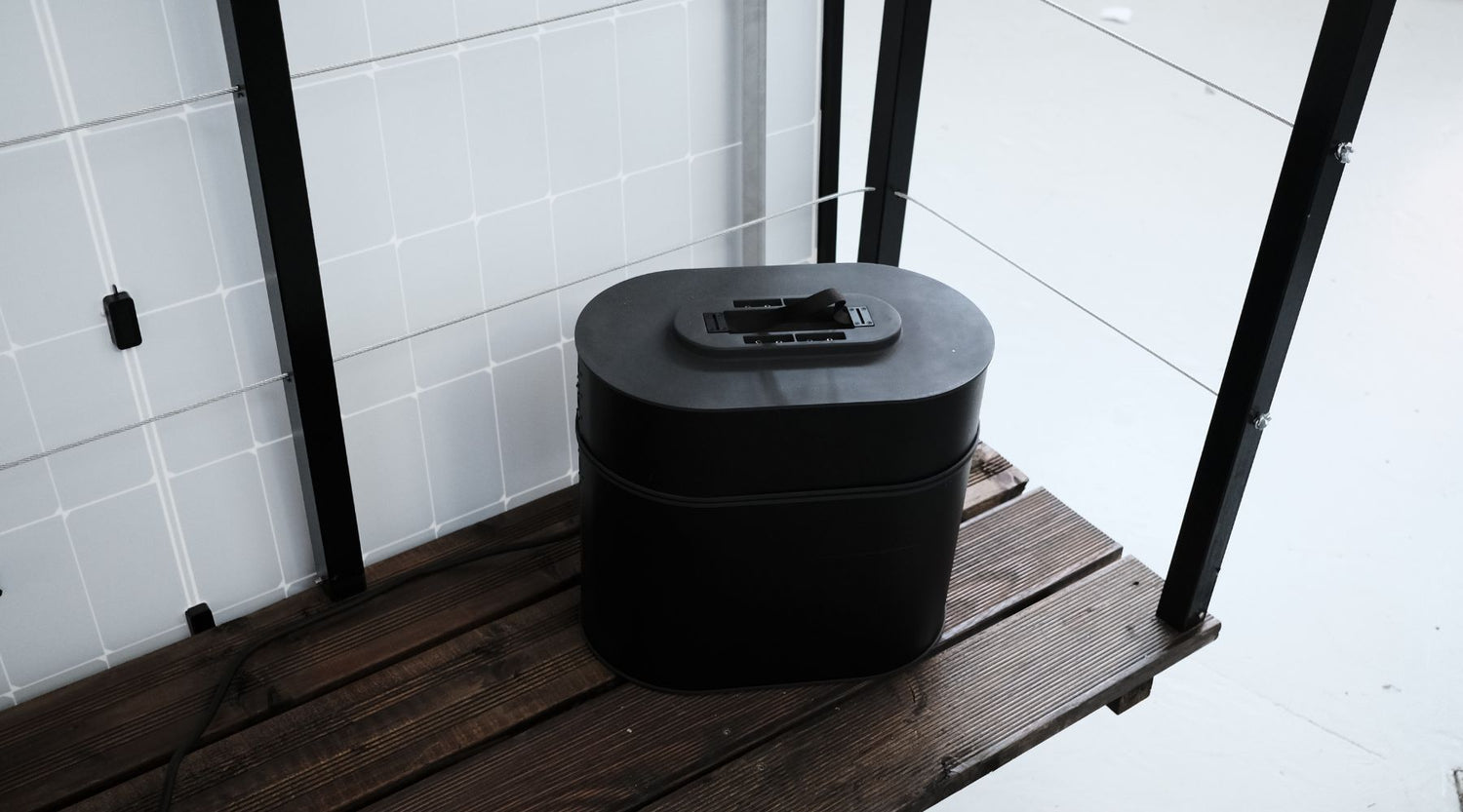
Why you should choose a balcony power plant with a storage system
If you're planning to get a balcony power plant or expand your usage options, then you've probably already asked yourself the question: Is a balcony power plant with storage worthwhile?
A balcony solar power system with storage offers a sustainable and cost-effective way to optimally utilize solar power . While a balcony solar power system without storage only generates electricity from its PV modules when the sun is shining, a battery storage system can store excess solar power for later use . This not only increases the system's efficiency but also makes you less dependent on rising electricity prices . In this article, we'll show you why purchasing a storage system for such a mini solar installation is worthwhile and what advantages it offers.
Direct consumption vs. storage – Why storage makes sense
Conventional plug-in solar systems without storage feed excess electricity into the public grid without the operator receiving any compensation. This means that some of the generated energy goes unused. A balcony power plant with storage, on the other hand, stores the generated electricity and makes it available precisely when needed – for example, in the evenings or on cloudy days.
Advantages of storage
- Maximizing self-consumption : Instead of leaving excess electricity unused, it can be used later.
- Increased independence from the electricity grid : Reduces the amount of electricity drawn from the grid and makes it less vulnerable to electricity price increases.
- Optimal use of solar power : Electricity is available even when the sun is not shining.

Four deployment scenarios for MOE
Bidirectional inverter + X storage
- Requirements : Smart meter and dynamic electricity tariff.
- Application : The end customer lives in an apartment or house, whether rented or owned. Using the bidirectional inverter, the storage units are charged during times of low electricity prices (e.g., at night or midday) and discharged during peak tariff periods (morning and evening).
- Benefits : The optimal number of storage units depends on individual consumption. If the batteries are constantly full and never discharged, no additional savings are possible. The goal, therefore, is to reduce electricity costs through maximum self-consumption.
Bidirectional inverter + X storage + X MoeCell (BKW)
- Extension of Scenario 1 : Additionally, electricity from a private balcony power plant (BKW) is available.
- Advantage : Due to the fixed base costs of electricity tariffs, solar power from your own solar power plant is always the cheapest option. The fastest amortization is achieved when the storage system is charged with the panels. Specifically, this means: using cheaper electricity from the grid at night and storing your own solar power from the solar power plant at midday.
- Flexibility : MOE (1) can be connected to any balcony solar system.
Existing PV system + bidirectional inverter + storage
- Initial situation : The end customer already has a PV system on the roof, but no storage or only one that is too small.
- Added value : Instead of feeding excess electricity into the grid for a few cents, it can be stored and then used when the sun isn't shining – which in turn increases self-consumption.
- Easy installation : MOE simply plugs into a standard household outlet and is initially treated like a normal appliance. This allows the storage unit to be charged before any excess electricity is fed back into the grid.
Expand existing balcony power plant (BKW) with storage
- Initial situation : A combined heat and power plant (with a certain number of panels and inverters) is already in place, but no storage system is yet available.
- Advantage : Every storage system in the MOE system has its own MPPTs and can therefore be easily retrofitted. The existing solar power unit is simply connected to the storage system. This allows unused solar power to be stored temporarily.
- Background : Many storage systems on the market have an integrated inverter, which often adds extra cost and weight. MOE offers a streamlined solution where you only need to retrofit the necessary components.

A look at the figures – How much electricity can actually be used?
A balcony power plant with storage can significantly increase energy efficiency . Here's a concrete example calculation:
Example: 800-watt balcony power plant with storage
Assuming your balcony power plant consists of two solar panels, each with a peak output of 400 watts , ideally positioned at a 30° tilt angle and without shading, the annual electricity production would be as follows:
- Annual production: approx. 800 kWh
- Utilization rate without storage: approx. 50% (400 kWh directly usable)
- Utilization rate with storage: up to 85% (680 kWh usable)
Using a battery storage system significantly increases self-consumption. This also has a noticeable financial impact.
Which storage systems are best suited for balcony power plants?
Lithium-ion batteries – The best choice for balcony power plants
Modern battery storage systems rely almost exclusively on lithium-ion technology , as it offers high energy density, a long lifespan, and low charging losses. Compared to older lead-acid storage systems, they are more efficient and space-saving. Moe works with lithium-ion technology and always keeps the future in mind.
Optimal storage size for your balcony power plant
The storage capacity should match daily electricity generation and individual electricity consumption. The following sizes are common for a balcony power plant with storage :
1 kWh storage – for households with low electricity consumption
2–3 kWh storage – for a higher self-consumption rate
Launch of our bidirectional home storage system:
But why MOE?
With MOE, every household can become an active part of the energy transition – and save money in the process. Not only as storage for your balcony power plant, but also to absorb high electricity prices. The optimal storage solution .
Charge MOE at low prices via a dynamic electricity tariff.
Use the stored electricity when tariffs are high.
Save up to two-thirds of your electricity costs.
- Easy to integrate: Whether with or without a balcony power plant, MOE can be effortlessly integrated into your household.
- Modularly expandable: Flexibly adjust the number of batteries to your needs – one inverter is all you need. One storage unit has a capacity of 2 kWh, and thanks to our modular system, storage expansions to 2, 4, 6, 8, or 10 kWh are no problem.
- Versatile use: Also suitable as a plug-and-play storage system for large PV systems to make good use of excess electricity.
- Developed by a Stuttgart-based start-up – Engineered in Germany with German customer support .
- Open software interface: Seamlessly integrates into smart home systems such as Home Assistant.

Financial advantages of a storage system
The increased use of self-generated electricity leads to significant savings in electricity costs :
- Without storage : Annual savings of approximately €200
- With storage : Annual savings of approximately €552
The difference shows that a balcony power plant with storage pays off in the long run. Especially with potentially rising electricity prices in the future, storage can help reduce energy costs and increase independence from the grid.
Example calculation – When does a balcony power plant with storage pay for itself?

The purchase price for a battery storage system starts at approximately €1000 and goes up from there, depending on capacity and manufacturer. Increased self-consumption can result in annual savings of up to €552 . This means:
- Payback period without subsidies : approx. 4.7 - 5.4 years (with MOE)
- With funding (available in some federal states): significantly faster
A mini PV system with storage is therefore a future-proof solution that not only saves money in the long term, but also actively contributes to the energy transition.
Legal aspects and registration
In Germany, there are special regulations for balcony power plants with storage . Here are some important points:
- Reporting requirement : Since the introduction of the first solar package in April 2024, the registration of balcony power plants has been simplified. Systems with an inverter output of up to 800 watts no longer need to be reported to the grid operator; however, registration in the market master data register of the Federal Network Agency is still required.
- Power limitation : The maximum feed-in power is currently 800 watts , but further increases are planned for the future. A 2000-watt limit is under discussion.
- Regulations for battery storage systems : Battery storage systems must comply with applicable safety standards. Proper installation and operation of the storage system must be ensured to guarantee the safety of the entire system.
Conclusion – Why a balcony power plant with storage can be worthwhile.
A battery storage system for your balcony solar power plant is the ideal solution for anyone who wants to use solar power efficiently and sustainably reduce their energy costs . You can easily install this mini solar system on your balcony and benefit from additional advantages thanks to the battery storage. Here's a summary of the most important advantages:
- Increases self-consumption of solar power to up to 85%
- Makes you more independent from rising electricity prices
- Saves up to €552 per year in the long term (possibly even more in the future)
- Sustainable and environmentally friendly energy source
Those who want to invest in a sustainable energy supply for the long term will benefit from investing in a balcony power plant with storage . Thanks to advanced storage technologies, the economic viability will improve even further in the coming years. Learn more now and invest in the future!
If you want to know how a balcony power plant with storage works , you can read about it here.
FAQs on the topic:
1. Does a balcony power plant with storage really make sense?
Yes, a balcony power plant with storage makes sense, as it maximizes self-consumption and reduces dependence on the electricity grid. Furthermore, it can save on electricity costs in the long run .
2. Is it worth buying a storage system for my balcony power plant?
Purchasing a storage system is worthwhile if you want to use as much of your self-generated electricity as possible. Especially with rising electricity prices, a storage system offers a sensible addition.
3. Can I expand my existing balcony power plant with a storage unit?
Yes, many balcony power plants can easily be retrofitted with a battery storage system . An expansion can significantly increase self-consumption.
4. What storage capacity is ideal for a balcony power plant?
The storage size depends on your electricity consumption. In most cases, 1–3 kWh of storage capacity is sufficient to ensure high self-consumption. Our storage systems start at 2 kWh and are modularly expandable.
5. Are all solar modules compatible with storage systems?
Modern battery storage systems are compatible with most solar modules. Compatible. However, it should be ensured that the inverter is compatible with the storage system.



Leave a comment
This site is protected by hCaptcha and the hCaptcha Privacy Policy and Terms of Service apply.