


Legal framework for balcony power plants
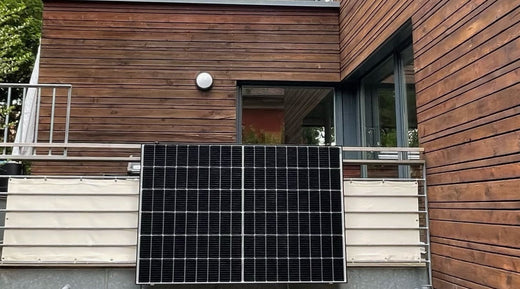
The installation of a balcony power plant in Germany is subject to clear legal requirements. The aim of these regulations is to guarantee both safety and grid stability. Today, we'll give you an overview of the legal situation regarding balcony power plants.
The most important points in brief
Balcony solar power systems are generally permitted up to a capacity of 800 watts, with this limit referring to the maximum inverter output. Consumers must register their systems in the Federal Network Agency's market master data register. This registration is important to maintain an overview of installed solar energy and to ensure compliance with legal requirements.
Technical requirements such as compliance with VDE standards and the use of an approved inverter are mandatory. While not legally required, a secure connection via Schuko or Wieland plugs is recommended. A Schuko plug is permitted, but some grid operators and safety experts consider it less secure. A Wieland plug is recommended as a safer alternative, as it is specifically designed for feeding power into the grid. Some grid operators require the Wieland plug.
Anyone installing a balcony power plant must ensure that it poses no risk to the building's electrical system or the public power grid. Landlords and homeowners' associations also play an important role: tenants generally require permission for structural alterations, but this is not necessary if no structural changes are made to the building and the installation is reversible. However, separate regulations may apply in rental agreements or other contracts.
The legal framework for balcony power plants is constantly evolving. With the Solar Package II, power limits of up to 2000 watts could soon be possible, which would facilitate the operation of more powerful systems. This development shows that the legal situation for balcony power plants is becoming increasingly consumer-friendly, while at the same time remaining bound by technical and legal standards. All these aspects contribute to the safe and efficient integration of balcony power plants into the energy transition.

Rights and obligations for tenants and landlords
As a tenant, you are allowed to install a balcony power plant, provided it does not require any structural alterations to the building. A standard household plug (Schuko plug) used to operate the system is not considered a structural alteration. Why is this relevant? Many tenants fear that their landlord might prohibit the use of balcony power plants. However, as long as the installation is reversible and poses no danger, there are hardly any legal grounds for objection.
According to tenancy law, tenants are not allowed to make structural alterations that affect the building's substance. This means, for example, that drilling holes to attach solar panels may require a permit.
However, there are exceptions: If the installation significantly impairs the visual appearance of the property, the landlord could object. An example would be the installation of large solar panels on the facade. It is also advisable to check the terms of the rental agreement to see if they might prohibit the installation for various reasons.
Landlords cannot generally prohibit the installation of a balcony power plant. However, they must ensure that the system complies with applicable safety regulations and poses no danger to the building or other tenants. If structural modifications are necessary, a written agreement is advisable.
The question of liability is also interesting: Should the balcony power plant cause damage to the building, this could lead to disputes. Therefore, it is advisable to take out liability insurance that covers potential damages.
Regulations for homeowners' associations
In a condominium association, the hurdles for installation are often higher. Here, all structural changes must be approved by the association. Why is that? Common property cannot be altered without the consent of all owners. For example, if a solar panel is installed on a balcony that extends beyond the railing, this could be considered an encroachment on common property.
According to condominium law, such alterations may not be made without the consent of the community. Owners should therefore speak with other members of the community at an early stage and present their plans transparently.
To avoid conflicts, it is advisable to plan the installation in such a way that it does not visually or technically interfere with the common property, if possible. Written consent and a vote within the owners' association are recommended.
Tax and financial aspects
Tax treatment of balcony power plants
The 0% VAT exemption makes mini solar power systems particularly attractive financially. Since January 1, 2023, VAT has been waived on solar power systems installed on or near residential buildings (§ 12 para. 3 UStG). This significantly reduces the purchase costs.
Income from feeding solar power into the grid is generally tax-free, provided certain limits are not exceeded. According to Section 19 of the German Value Added Tax Act (UStG), operators of balcony power plants can utilize the small business regulation if their annual turnover is less than €22,000. Additionally, smaller PV systems used primarily for private purposes may be exempt from income tax under Section 3 No. 72 of the German Income Tax Act (EStG) if they are classified as "hobbies." Consumers should nevertheless verify whether they meet the requirements for these tax exemptions.
Funding opportunities
Check for regional funding programs or nationwide subsidies for your system. Many German states offer financial support for the purchase of mini-PV systems. Examples of such funding programs include:
- Bavaria: The "PV storage program" supports the installation of solar power systems.
- North Rhine-Westphalia: Regional subsidies are available here for balcony solar systems.
- Baden-Württemberg: Funding is available for sustainable energy solutions.
There are currently no nationwide funding programs specifically for mini-PV systems, but many municipalities have their own initiatives. It's worth contacting your local council or regional energy agencies for more information.
Financial advantages of balcony power plants
A balcony power plant can significantly reduce your electricity costs. Especially when you use the generated solar power directly, your dependence on rising electricity prices decreases. For example, a typical system with a capacity of 600 to 800 watts can generate annual savings of between 50 and 150 euros, depending on sunlight and your own consumption.
In some regions, municipalities also run programs to promote photovoltaic systems. These often include subsidies for the purchase or installation of balcony power plants. It is worthwhile taking advantage of these programs to further shorten the payback period of the system.
Registration requirement and market master data register
Since the simplification introduced by the Solar Package I, registering balcony power plants has become much easier. You only need to register your mini solar system in the Market Master Data Register – a personal notification to the grid operator is no longer required. The Market Master Data Register serves not only to collect data but also to ensure transparency. It aims to guarantee that all systems are registered in a traceable manner and that an overview of installed solar energy in Germany is available.
But why register?
Firstly, it allows the federal government to monitor progress in the energy transition. Secondly, it enables grid operators to initiate targeted measures to stabilize the electricity grid if necessary. Failure to register can have legal consequences, such as fines. Consumers should therefore ensure that their registration is completed correctly and on time.
Step-by-step instructions for registration
- Gather data : Obtain the relevant information about your mini solar system. This includes the system's output, the serial numbers of the modules and inverter, and manufacturer specifications.
- Start registration : Go to the website of the Federal Network Agency's Market Master Data Register . This platform is the central point for registering all solar energy systems in Germany.
- Enter personal and technical data : Fill in the required fields with your personal data and the technical specifications of the system. Ensure that all information is entered correctly and completely.
- Confirmation received : After registering, you will receive confirmation of successful registration. You should keep this confirmation safe, as it serves as proof of proper registration.
Registration is legally required and ensures that your system is integrated into the overall energy plan. Without this registration, you could face legal problems, and your balcony power plant might not be allowed to operate. Your landlord's consent is also important, especially for rented apartments, to avoid conflicts.
Connection to the power grid

The connection is usually made via your existing meter. For older Ferraris meters, you may need a new digital electricity meter or a bidirectional meter. You'll need to have it installed if you want to feed energy into the grid. The grid operator usually covers the costs.
The obligation to replace meters also applies under the special regulations for plug-in solar devices introduced with the solar package: Network operators must expressly equip the relevant metering points of plug-in solar devices “with a modern metering device as a bidirectional meter or an intelligent metering system” ( § 10a para. 2 EEG ).
Why are these requirements important?
The technical and legal requirements are not only mandatory, but also ensure that your balcony power plant operates safely and efficiently. A certified inverter prevents voltage fluctuations or grid disturbances. VDE standards guarantee that the installation is safe for both you and your neighbors. Correct connection via Schuko or Wieland plugs ensures that the generated electricity is used or fed into the grid correctly, without any technical problems.
Furthermore, registration in the market master data register plays an important role in overarching energy planning. It allows for an overview of the expansion of balcony power plants in Germany and prepares the electricity grid for future challenges. Consumers who meet these requirements actively contribute to a stable and secure energy transition.
Follow safety regulations!
Ensure your system meets all technical and legal requirements. Avoiding overloads caused by improper connections is particularly important.
Requirements for the installation of mini solar power systems

The installation of balcony power plants must meet certain requirements to be legally compliant and safe. A key element is the use of a certified inverter . This ensures that the fed-in energy is technically compatible with the house's electrical grid and poses no risk to grid stability. Inverters should also comply with current VDE standards, which define binding safety standards for plug-and-play systems.
The connection of the system is also important. Balcony power plants can be operated via a standard Schuko plug if there is no continuous feed-in to the grid. Alternatively, Wieland sockets offer even greater safety, as they are specifically designed for feeding solar power into the grid. Consumers should ensure that the connection is carried out professionally to avoid short circuits or other risks.
The placement of the solar panels also plays a crucial role. The panels must be oriented to receive optimal sunlight without negatively impacting the surrounding area or other residents. Furthermore, they should be securely mounted to prevent hazards from falling parts during storms or strong winds.
To ensure a smooth installation, the specific requirements of the electricity supplier and the building's wiring should be checked. Older buildings, in particular, often lack suitable wiring, which may necessitate additional modifications. Professional advice can be helpful in such cases.
Performance limitations
The maximum permissible inverter output of 800 watts is a fixed component of current legislation. Before the introduction of the first solar package, the limit was 600 watts. This limitation was introduced to ensure that balcony power plants could feed into the existing electricity grid without risk. But why this particular limit? Studies show that an output of up to 800 watts is ideal for self-consumption in most households. It is sufficient to operate typical electrical appliances such as refrigerators or televisions without forcing a feed-in to the grid.
Larger systems with 2000 watts or more require a more complex technical infrastructure, such as special feed-in sockets and smart meters that prevent the backflow of electricity into the grid. Such systems are often not suitable for the average consumer due to higher costs and the need for more permits.
EU regulations and their impact
The EU has a significant influence on national legislation. For example, the EU places great importance on harmonizing the expansion of renewable energies across all member states. In some countries, such as the Netherlands and France, power limits of up to 2000 watts already apply to balcony power plants. This demonstrates that Germany has even stricter regulations in this regard. The reason for this lies in Germany's caution regarding grid overloads and technical problems.
The harmonization of regulations within the EU could lead to further relaxation of rules in Germany in the future. This would make it even easier for consumers to operate more powerful systems and further reduce dependence on external energy supplies. The EU also requires that the registration and installation of plug-in solar systems be made simpler and faster in order to increase their acceptance.
The German federal government has partially implemented these demands but is under pressure to make further improvements. The discussion surrounding the Solar Package II , which could impose power limits of up to 2000 watts , is particularly interesting. These developments will be crucial for the future of balcony power plants.
Alignment between EU regulations and national laws ensures that standards regarding security and network stability are met.
Future developments and outlook

In recent years, the German Bundestag has initiated important changes that facilitate the operation of balcony power plants. A key focus is on simplifying the permitting process for such systems through clear regulations. Consumers living in areas with strict building codes benefit from these developments. Integrating plug-in solar devices is now possible in many homes without requiring extensive renovations.
In the future, the way could be cleared for more powerful systems, especially through planned power limits of 2000 watts. This would make it possible to operate more devices directly with self-generated solar power and maximize self-consumption.
Planned legislative changes
With the Solar Package II, the German government plans to significantly simplify the use of balcony power plants and further reduce the obstacles for private households. These legislative changes are intended to promote the expansion of renewable energies and bring Germany closer to its climate targets. The following changes are included in Solar Package II:
What is already certain?
- Raising the power limit to 2000 watts : This is a key component of the Solar Package II and has been specifically announced by the German Federal Government. There is broad political support for this adjustment.
- Simplifying the registration process : The introduction of a digital registration procedure is part of the planned measures to reduce bureaucracy. This change also has strong political support and is likely to be implemented.
- Tax advantages : Small solar power systems (including balcony power plants) have been exempt from VAT since January 2023. Extending this regulation to larger systems is being discussed as part of the Solar Package II, but it is not yet confirmed whether this change will be implemented.
What is still unclear?
- Schuko plug restrictions : The discussion about the approval of Schuko plugs is not yet concluded. While there are proposals to facilitate their use, no binding decision has yet been reached, as these plugs are not specifically designed for feeding electricity into the grid and could potentially pose safety risks such as overheating or short circuits under continuous load.
- Increase in feed-in tariff : An adjustment to the feed-in tariff for balcony power plants is being debated, but no concrete changes have been finalized yet.
- Cost coverage for meter replacement : This measure is being discussed, particularly in connection with the consumer protection debate. However, it is not yet guaranteed.
- Easing restrictions for tenants : There are proposals to make it easier for tenants to access balcony power plants, but there is no concrete legal regulation on this.
Europe-wide trends regarding plug-in solar systems
In many EU countries, balcony power plants are already permitted with higher power limits. Countries like the Netherlands , France , and Italy allow balcony power plants with a capacity of up to 2000 watts or even more. These countries have recognized that the integration of mini-PV systems plays a crucial role in achieving their climate goals. The Netherlands, in particular, actively promotes balcony power plants through tax breaks and financial incentives.
Another example is Austria , where the power limits are less strict, and systems with up to 800 watts per module are permitted. Consumers can install multiple modules, each with up to 800 watts. The total output of the solar system is therefore not as strictly limited as in Germany. For example, two 800-watt modules could be used, resulting in a potential total output of 1600 watts . In combination with a suitable inverter, more electricity could be used or fed into the grid. Here, too, simplified registration procedures and regional subsidies support the use of solar power.
These developments in Europe are putting pressure on Germany to adapt its own regulations in order to remain competitive. The EU has also announced its intention to further harmonize regulations to accelerate the expansion of renewable energy in private households. The aim is to create uniform standards for the registration, installation, and use of balcony power plants, so that consumers in all member states can enjoy comparable benefits.
If Germany follows these examples, balcony power plants could become significantly more attractive here. In particular, the possibility of operating more powerful systems would considerably increase the contribution of private households to the energy transition.
In summary, it should be said that
If you are planning to install a balcony power plant, then:
- Observe the legal requirements and register your balcony power plant in the market master data register.
- Clarify any open questions with your landlord and ensure that the installation complies with all standards.
- Use regional funding programs to optimize your investment.
With a legally compliant balcony power plant, you can generate your own solar power and benefit from the advantages in the long term.
Frequently asked questions about the legal status of balcony power plants
Do I need to take out liability insurance?
Yes, this is recommended to protect yourself against damages.
What regulations apply in apartment buildings?
The same rights apply as for single-family homes, as long as no structural changes are made.
What happens if the 800-watt limit is exceeded?
Then different regulations apply, and registration with the network operator becomes necessary.


Leave a comment
This site is protected by hCaptcha and the hCaptcha Privacy Policy and Terms of Service apply.