
The most important points in brief
- Seek shade: An inverter should not be exposed to direct sunlight, as this can lead to overheating and efficiency losses .
- Ensure good ventilation: Inverters require sufficient air circulation to guarantee optimal performance and extend their lifespan.
- Weatherproof installation: An inverter should be installed in a location protected from moisture, rain and snow to avoid damage .
- Prefer short cable runs: Long cables can lead to energy losses . Installation should be as close as possible to the solar panels .
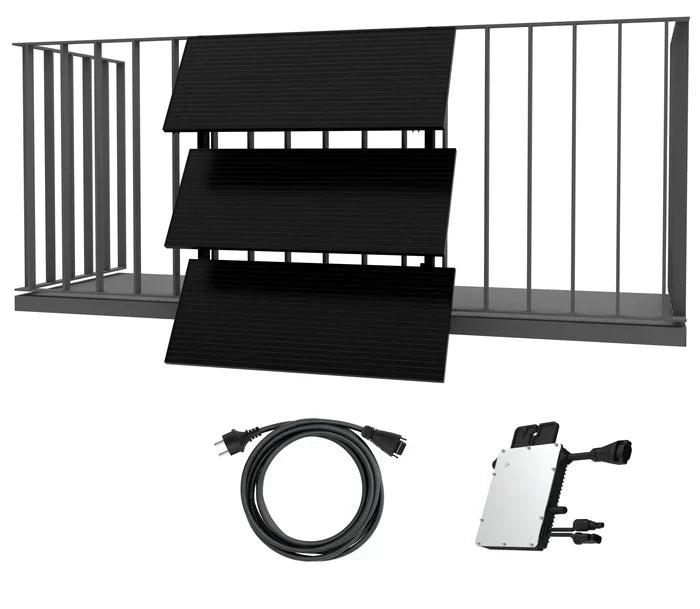
- Ensure secure mounting: The inverter must be securely attached to a suitable wall, balcony railing or directly to the solar modules .
- Comply with electrical regulations: Connection to the power grid must be carried out in accordance with applicable standards and safety regulations to avoid hazards.
The inverter – the heart of the PV system
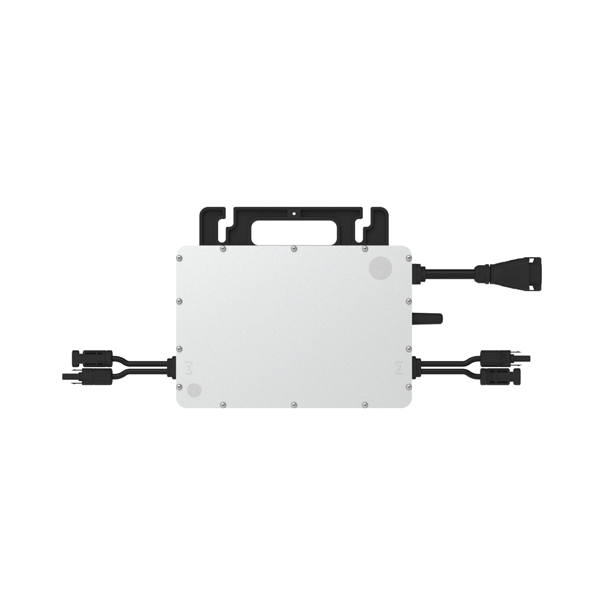
An inverter is the heart of a photovoltaic system , as it converts the direct current (DC) generated by the solar panels into alternating current (AC) , which is then used in the house or fed into the power grid . Without an inverter, the generated energy would be unusable. Therefore, properly installing the inverter is a fundamental aspect of operating a balcony power plant. When correctly installed, it ensures high efficiency, contributes to maximum energy yield, and boasts a long lifespan.
We'll briefly explain what an inverter is and then discuss how best to install it and what you should pay attention to.
But what actually happens inside this little box?
The conversion of direct current to alternating current
The conversion of direct current (DC) to alternating current (AC) is carried out by electronic circuits in the inverter. The current is conditioned to the correct frequency and voltage to safely power household appliances. This is crucial because household electricity is based on alternating current , and devices cannot operate without this conversion.
What types of inverters are there?
There are various types of inverters , including string inverters , microinverters , and hybrid inverters. Microinverters are often used, especially for balcony power systems, because they can be mounted directly on the solar panels and simply plugged into a wall socket . These allow for decentralized conversion directly at the source, minimizing power losses .

Mounting location for your inverter – Finding the right spot
The optimal mounting location of an inverter affects its efficiency and lifespan . Incorrect placement can lead to overheating , power loss , or even device failure . Common mounting locations include:
- Directly at the balcony power plant : Shorter cable routes, but potential risk of overheating.
- On the wall or balcony railing : Better ventilation, but longer cable runs.
- In weather-protected areas of the house : protection from the elements, but limited ventilation.
Directly on the balcony power plant – mounting on the solar modules
Mounting the inverter directly on the solar panels of mini solar systems has the advantage of short cable runs, minimizing power losses. However, direct sunlight can lead to overheating, reducing the inverter's lifespan. Therefore, the inverter should be mounted in a shaded area or with an additional, open protective cover.
Wall or balcony railing mounting - the advantages and disadvantages
Mounting on the wall or balcony railing offers better protection from the elements and ensures good ventilation to prevent overheating. However, this mounting option may require longer cable runs, which can lead to potential power losses. Therefore, high-quality, well-insulated cables should be used.
The most important factors for optimal inverter installation
You should therefore mount your inverter in such a way that the following points can be fulfilled as well as possible.
Avoid overheating – ventilation is crucial
To prevent overheating , the inverter should be mounted in the shade and not in direct sunlight. Adequate ventilation is important to maintain consistent inverter performance. An overheated inverter may lose efficiency or even shut itself down to prevent damage.
Protection against moisture and weather influences
The inverter should not be exposed to the elements . Rain, snow, or extreme humidity can damage the electronics. Installation in a protected area prevents problems such as moisture damage and significantly extends the device's lifespan.
Pay attention to cable lengths and cable routes
Long cable runs increase the risk of energy loss , as some power is lost due to cable resistance. Ensure that cable lengths are kept as short as possible and that cables are well insulated to minimize power loss.

Step-by-step instructions for inverter installation
Preparing the assembly site – The most important steps
- Choose the optimal mounting location : Take into account protection from moisture, good ventilation and short cable runs.
- Observe all regulations for safe installation: Read the manufacturer's instructions and comply with legal regulations.
- Ensure the area is well ventilated and protected : avoid narrow, enclosed spaces without air circulation.
Secure connection to the PV system
- Connect the inverter to the solar panels to efficiently use the generated direct current.
- Ensure a stable power outlet and secure cable routing to avoid risks such as short circuits or power losses.
Connecting to the power grid – Here's how it works
The inverter is connected to the house 's electrical grid . It is important to comply with all regulations to ensure safe operation. The inverter should be plugged into a suitable socket, ideally a dedicated, well-protected Schuko socket or a special Wieland socket, as incorrect connections can lead to problems in the household or the electrical grid.

So let's summarize again.
Common mistakes when installing the inverter
Incorrect placement
An incorrect mounting location can lead to efficiency losses . Avoid direct sunlight and ensure good ventilation so that the inverter can operate efficiently.
Inadequate ventilation and the risk of overheating
If the inverter is not adequately ventilated , it can overheat , negatively impacting its performance . A poorly ventilated inverter has to work harder to convert the same amount of energy, thus shortening its lifespan.
Cables that are too long or incorrectly laid
Long cable lengths lead to energy losses . Keep cable runs as short as possible and ensure secure installation . Use high-quality, well-insulated cables to minimize performance losses.

Leave a comment
This site is protected by hCaptcha and the hCaptcha Privacy Policy and Terms of Service apply.