


Why a balcony power plant with storage?
Rising electricity prices, the desire for greater independence, and growing environmental awareness are making balcony power plants increasingly popular. However, while a conventional system feeds electricity directly into the house's grid during the day, one problem remains: without storage, unused energy is wasted into the grid.
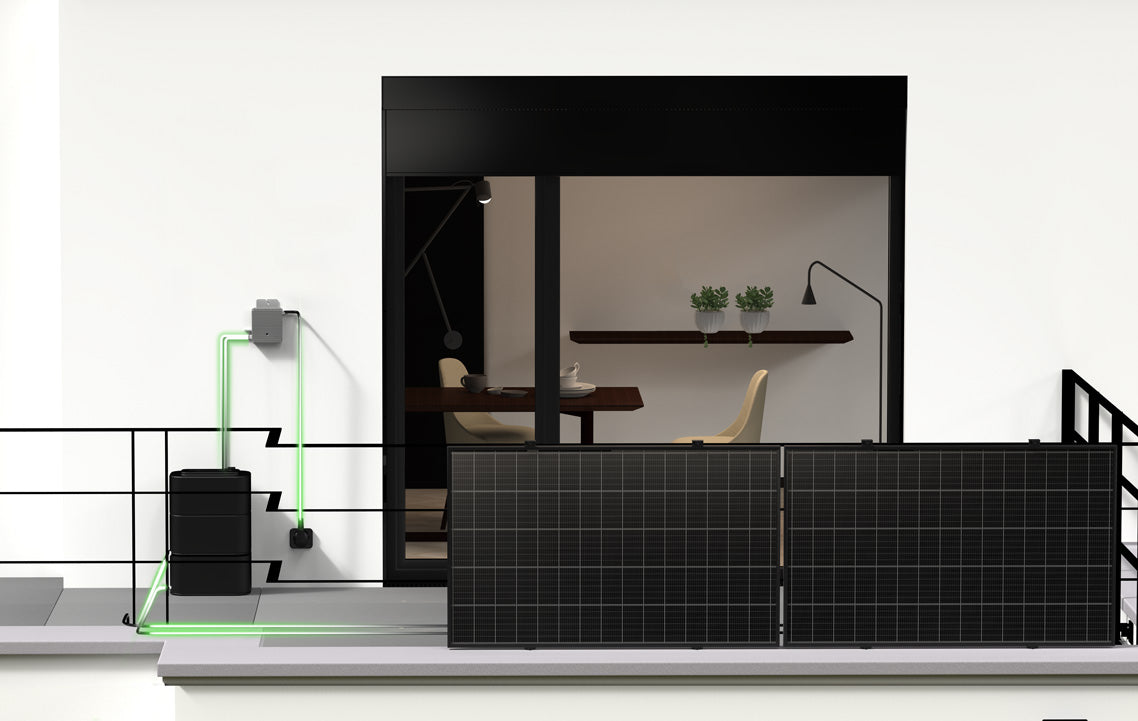
A storage system ensures that excess solar power can be stored and used at a later time – for example, in the evening or on cloudy days. This significantly increases the self-consumption rate, allowing you to use even more of your own solar energy instead of drawing electricity from the grid.
Advantages of a balcony power plant with storage:
✅ Higher self-consumption: Use more of your self-generated electricity
✅ Long-term savings: Reduced dependence on electricity providers
✅ Sustainability: Lower grid electricity consumption, lower CO₂ emissions
✅ Self-sufficiency & blackout protection: Can also be used during power outages with certain systems.
A balcony power plant with storage makes particular sense if your electricity consumption is high not only during the day. It is especially worthwhile for households that want to use as much solar power as possible in the evening hours as well.
The most important cost factors
The cost of a balcony power plant with storage is made up of several components. Depending on output, quality, and storage capacity, prices vary considerably. Anyone looking for a suitable system should be aware of the most important factors that influence the overall price.
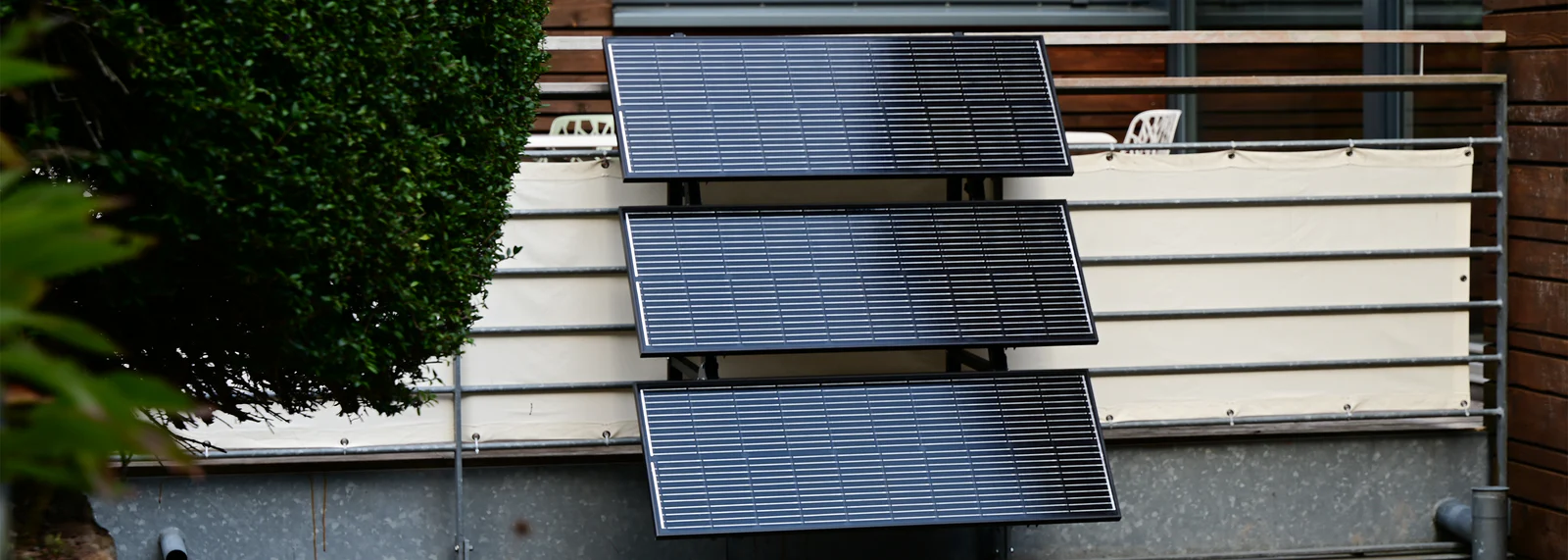
Solar modules – the heart of the system
Solar panels are the foundation of every balcony power plant. They determine how much solar energy is converted into electricity.
🔹 Monocrystalline modules: Higher efficiency, better performance in low light, but more expensive.
🔹 Polycrystalline modules: Cheaper, but less efficient.
🔹 Power classes: Balcony power plants usually range between 300 and 800 watts – the higher the power, the more expensive.
💰 Costs: Approx. €150-400 per module , depending on power output and quality. Total cost for solar modules: €300-800 (for 2 modules).
Inverter – The control center
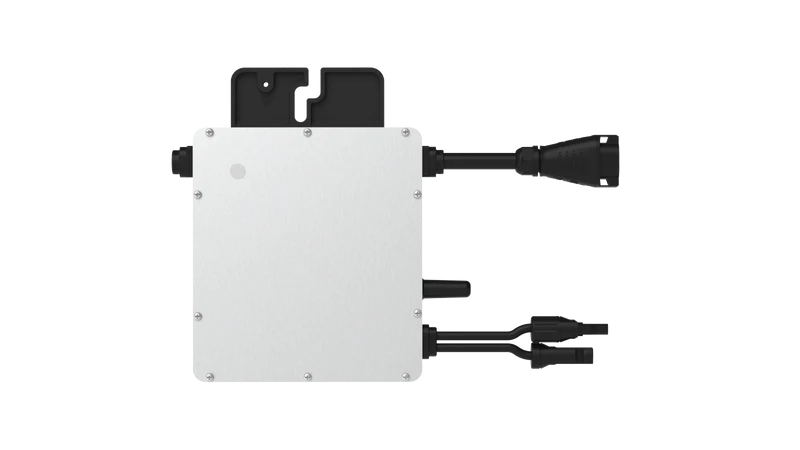
An inverter converts the generated direct current (DC) into alternating current (AC) so that you can use it in your home.
🔹 Standard inverter: Converts the electricity directly into the grid, cheaper.
🔹 Hybrid inverter: Allows for the additional storage of excess electricity, more expensive, but more flexible.
🔹 Micro-inverters: More efficient, improves the yield of individual modules.
💰 Cost: Approx. €200 - €800 (depending on performance and features).
Storage – Is the investment worthwhile?
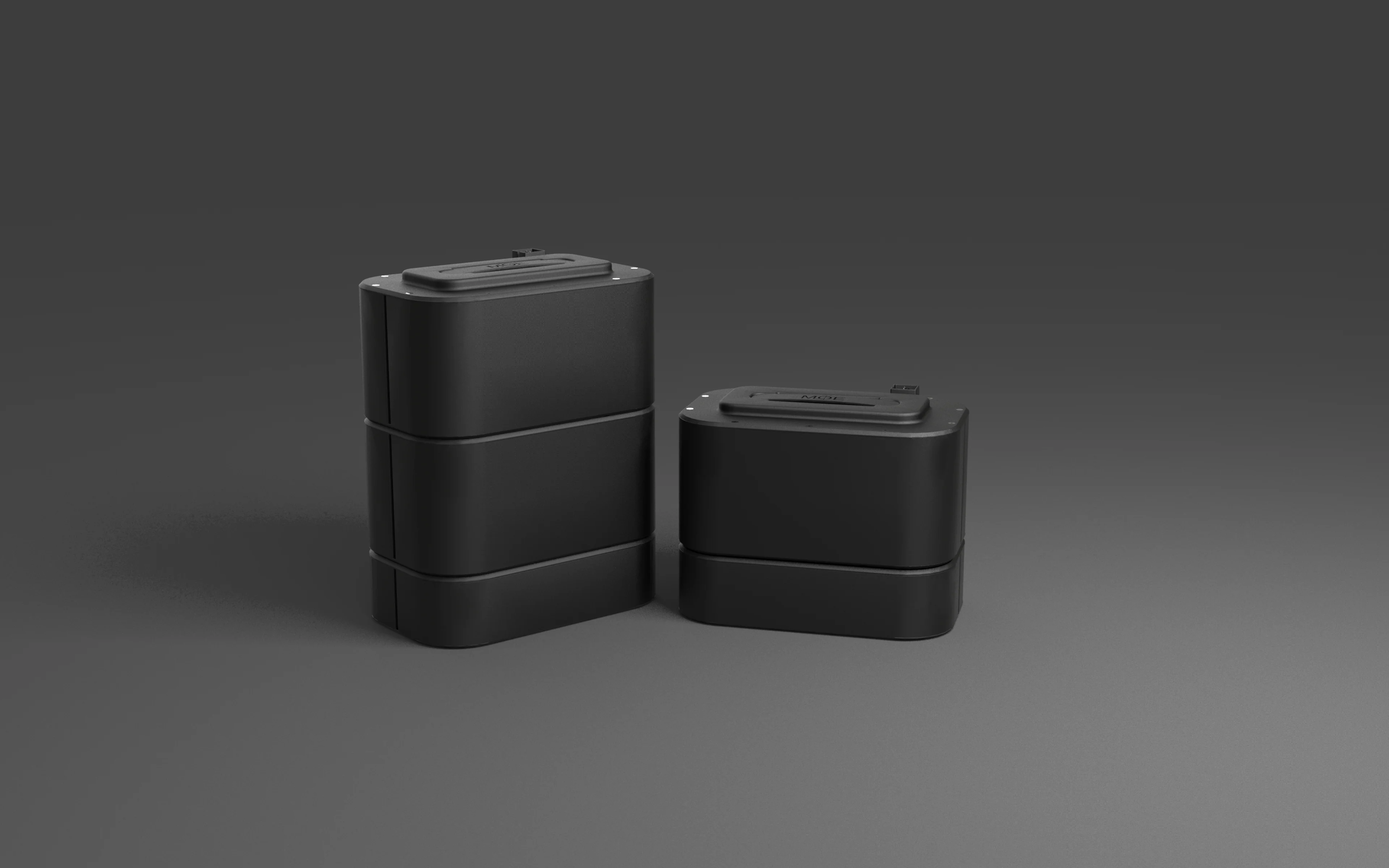
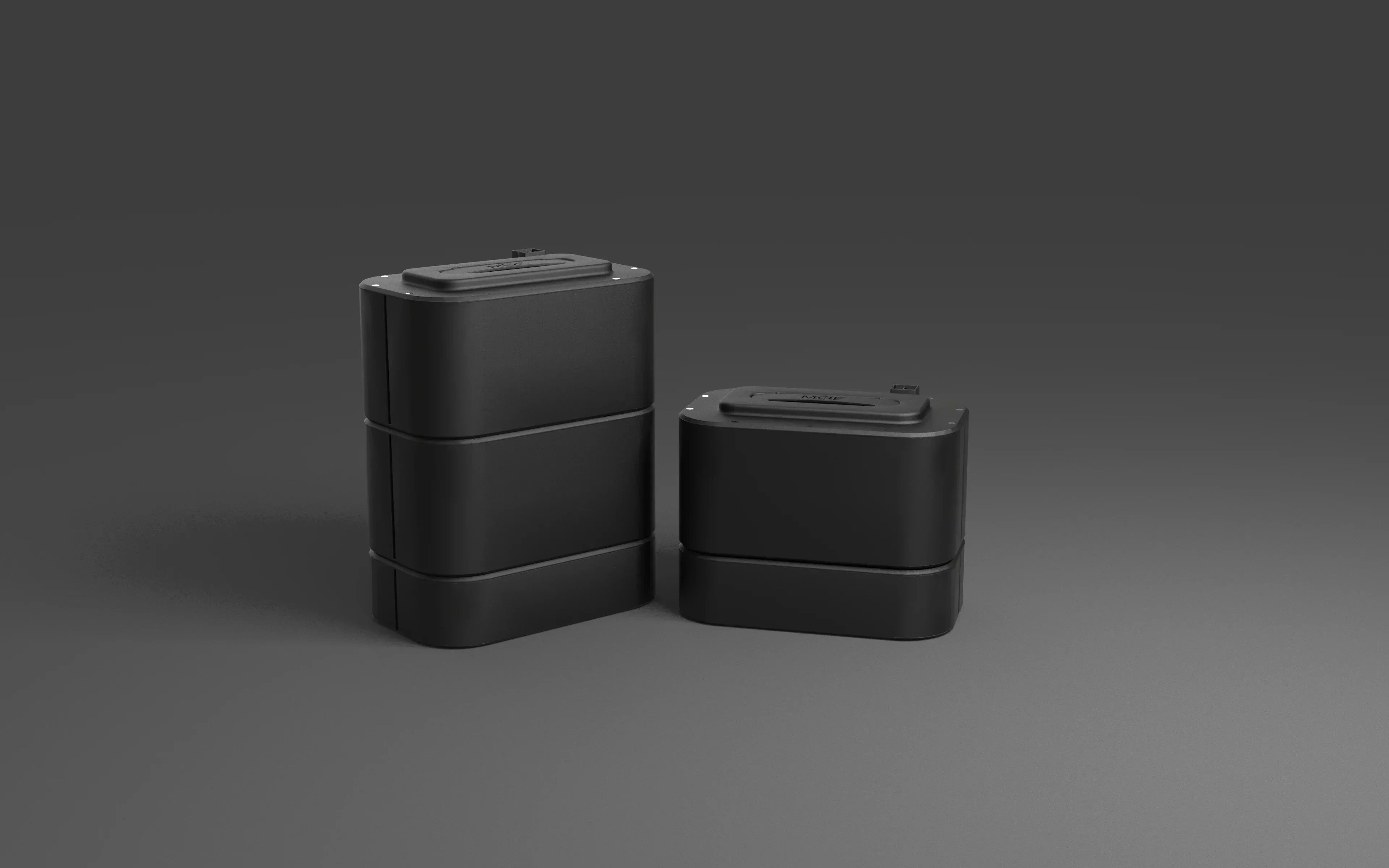
A storage system is the crucial element for maximizing self-consumption. However, prices vary considerably depending on capacity and technology.
🔹 Small storage units (500 Wh - 1 kWh): For households with low consumption, an affordable entry point.
🔹 Medium storage (1 - 2 kWh): Covers evening and night electricity needs for 1-2 people.
🔹 Large storage units (from 2 kWh): Greater self-sufficiency, for higher electricity demands.
💰 Cost: Approx. €500 - €2,500 , depending on capacity and technology (LiFePO4, lithium-ion, etc.).
Installation & Accessories – Hidden Costs?
Besides the main components, there are some additional costs that are often underestimated:
🔹 Mounting material: Brackets for balcony, roof or wall (€50 - €200).
🔹 Smart Meter: Enables intelligent control and consumption analysis (100 - 300 €).
🔹 Connection cables & adapters: Depending on plug type and cable length (€50 - €150).
💰 Cost: €200 - €650.
A price overview
Prices for balcony power plants with storage vary depending on output, storage capacity, and component quality. Here's an overview of the three most common price categories to help you make an informed decision.
Affordable entry-level models (€500-€800)
These systems are ideal for budget-conscious consumers or beginners who want to gain initial experience with solar energy. They typically have a power output of 300-600 watts and offer no or very small storage capacity (up to 500 Wh).
Suitable for: Households with low electricity consumption, primarily for direct daytime use.
Disadvantages: Without storage, excess electricity goes into the grid – resulting in lower savings throughout the day.
|
category |
Performance |
Storage size |
Advantages |
Cost |
|---|---|---|---|---|
|
Entry-level models |
300-600 W |
No/small storage (up to 500 Wh) |
Affordable, for direct consumption |
€500 - €800 |
|
middle class |
600-800 W |
1-2 kWh |
Good value for money |
€1,000 - €2,000 |
|
Premium sets |
800 W+ |
From 2 kWh |
Maximum self-sufficiency, intelligent energy management |
From €2,500 |
One indicator: The costs at MOE
MOE Balkonkraftwerke offers high-quality balcony power plant sets for various requirements – from compact solutions for beginners to powerful systems with storage options.
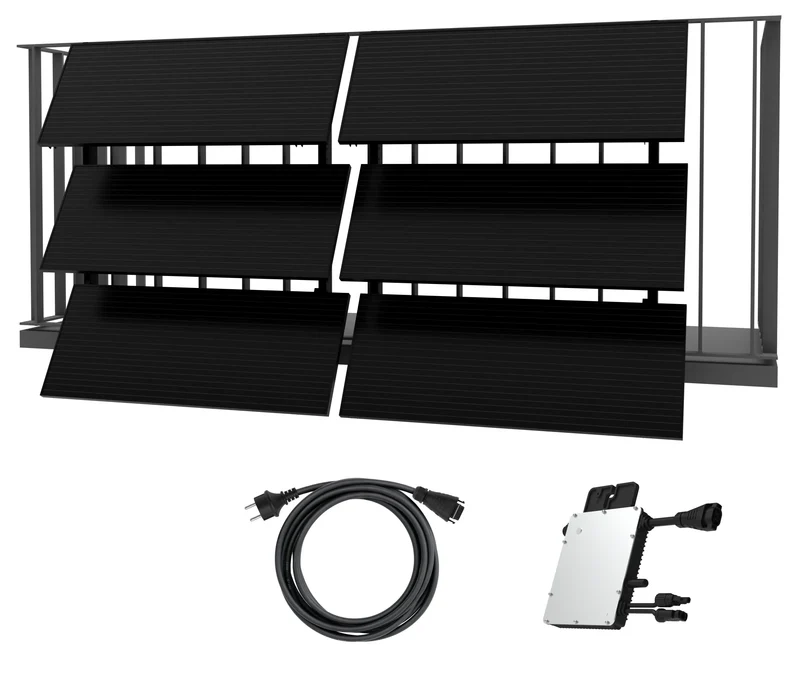
Affordable entry-level option with the MoeCell Set 185W
The MoeCell Set 185W is a compact and affordable solution for anyone wanting to gain initial experience with a plug-in solar system. It is particularly suitable for smaller balconies and helps to reduce electricity costs.
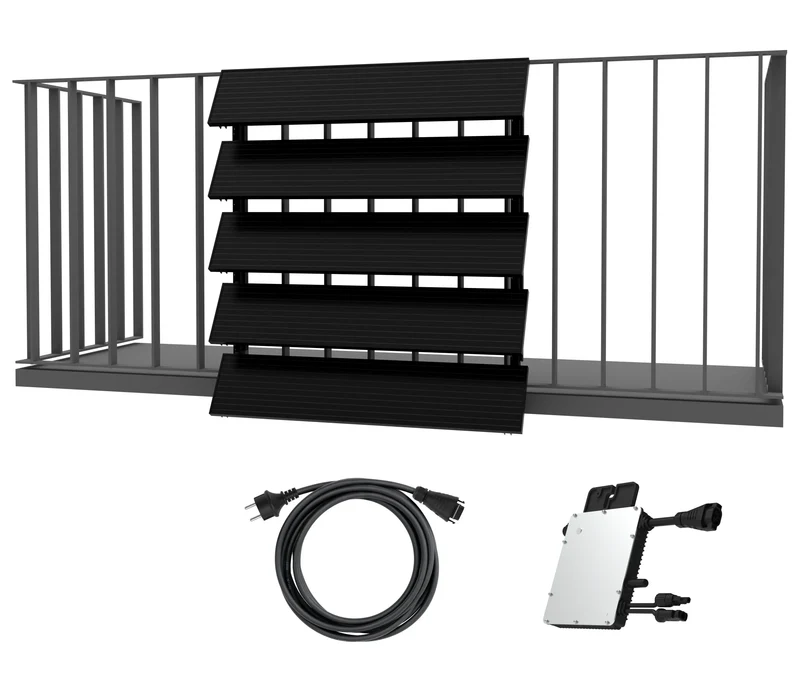
More power with the MoeCell Large Set 450W
For those who want to generate more energy, the MoeCell Large Set 450W offers a more powerful option. This set provides a higher storage capacity and is ideal for households that want to maximize their self-consumption.
Optimization through high-performance inverters
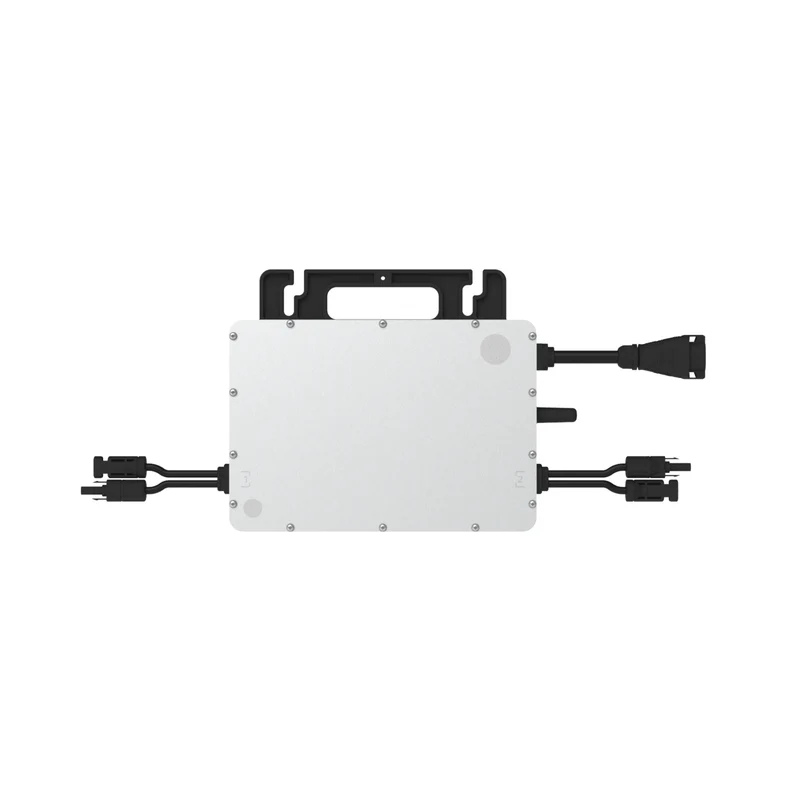
A high-quality inverter ensures the best possible efficiency for a balcony power plant and storage system. The Hoymiles HMS 800W-2T is a reliable choice for anyone wanting to operate a balcony PV system with higher output.
MOE therefore offers a suitable solution for every need – whether a cheap entry-level option or a high-performance balcony power plant with storage.
Is a balcony power plant with storage worthwhile in the long term?
A balcony power plant with storage offers many advantages, especially the ability to use your own solar power in the evenings or at night. This increases self-consumption and reduces dependence on the electricity grid. Particularly in times of rising electricity costs, such a solution can help save money in the long run.
The payback period depends on various factors, including the output of the solar panels, the storage capacity, and electricity price trends. A standard plug-in solar system without storage often pays for itself within 5 to 8 years . Adding a storage system can extend this period but offers greater grid independence and more efficient use of the generated energy.
Besides the financial aspects, sustainability also plays an important role. Those who use a balcony power plant storage kit actively contribute to the energy transition and reduce their CO2 emissions . Furthermore, an integrated storage system ensures more efficient use of the generated energy.
In the long term, a balcony power plant with storage is therefore not only financially worthwhile, but also ecologically – especially for households that want to maximize their own consumption and become more independent from rising electricity prices.
Frequently Asked Questions
How practical is a balcony power plant with storage?
A balcony power plant with storage offers many advantages, especially for households that want to use their own solar power even outside of daylight hours. Without a battery, unused energy goes directly into the grid, while a battery stores excess electricity and makes it available later. A battery can be particularly worthwhile with all-in-one complete sets that offer easy installation. Those who want to be as independent from the power grid as possible benefit in the long run from a higher self-consumption rate and lower electricity costs.
How expensive is a storage system for a balcony power plant?
The cost of a battery storage system depends heavily on its size and technology. Small storage units with 500 Wh to 1 kWh typically cost between €500 and €1,000, while larger systems with 2 kWh or more often exceed €2,000 . Particularly high-performance solutions, such as those from Anker, offer high efficiency and a long lifespan, but are also more expensive to purchase. Many mini solar systems allow for the later addition of a storage kit, enabling flexible adaptation to individual energy needs.
When does a balcony power plant with storage become cost-effective?
A balcony solar power system with storage is particularly worthwhile for households that use their solar power not only during the day. While a simple balcony solar system without storage often pays for itself after 5 to 8 years , an all-in-one complete set with storage can have a longer payback period – depending on output, size, and electricity price trends. However, rising energy prices can cause the investment to pay off more quickly, especially if a significant amount of self-generated electricity is stored and used.
How much can you save with an 800-watt balcony power plant?
An 800-watt balcony solar power system can generate up to 800 kWh per year, depending on location and sunlight. At an average electricity price of 30 cents per kWh, this results in savings of up to €240 annually . These savings increase further when combined with a battery storage system, as more solar energy is used directly and less is fed into the grid. A comprehensive system with storage further maximizes this energy independence and protects against rising electricity prices.

Leave a comment
This site is protected by hCaptcha and the hCaptcha Privacy Policy and Terms of Service apply.