

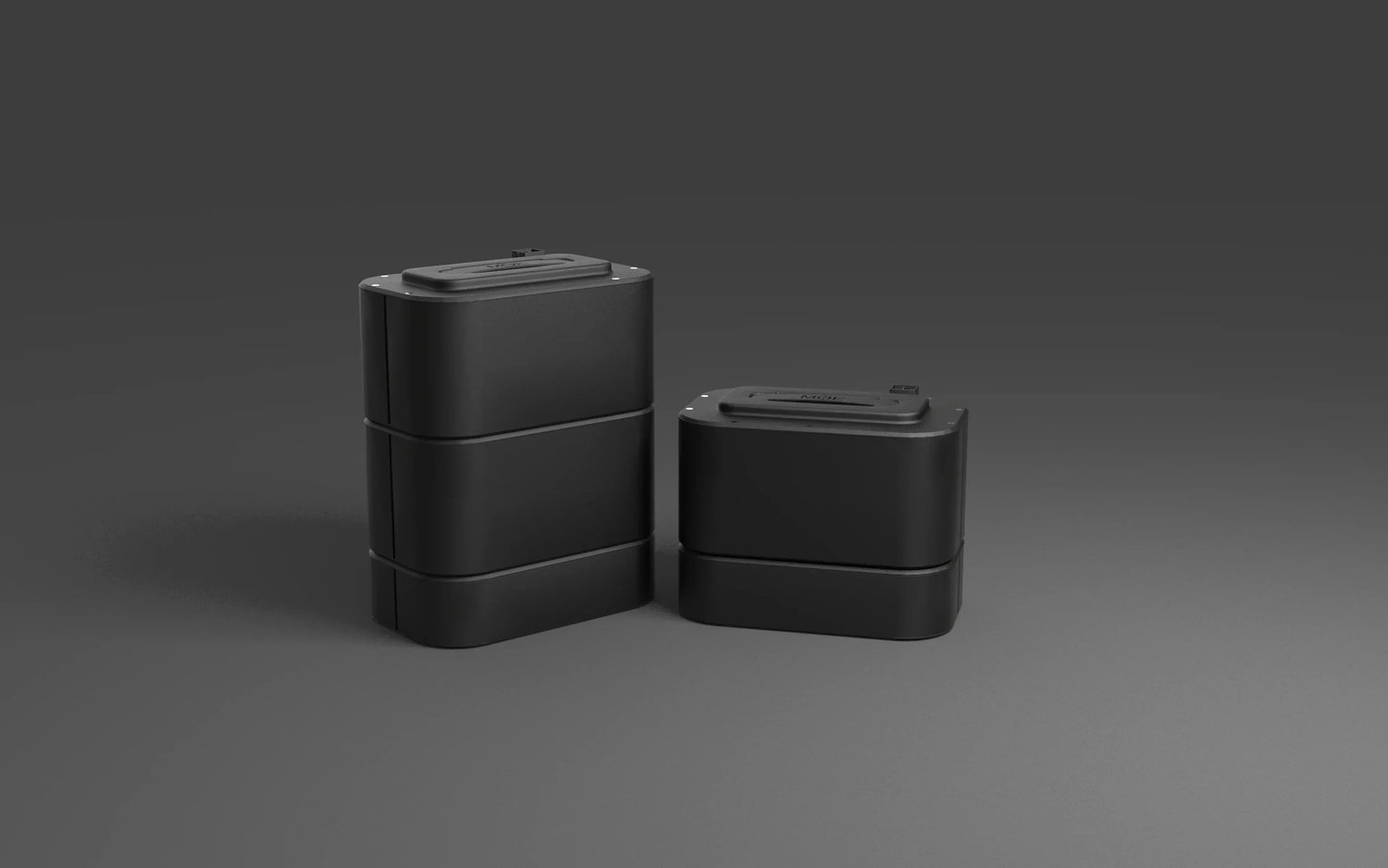
Why a storage system makes sense for balcony power plants
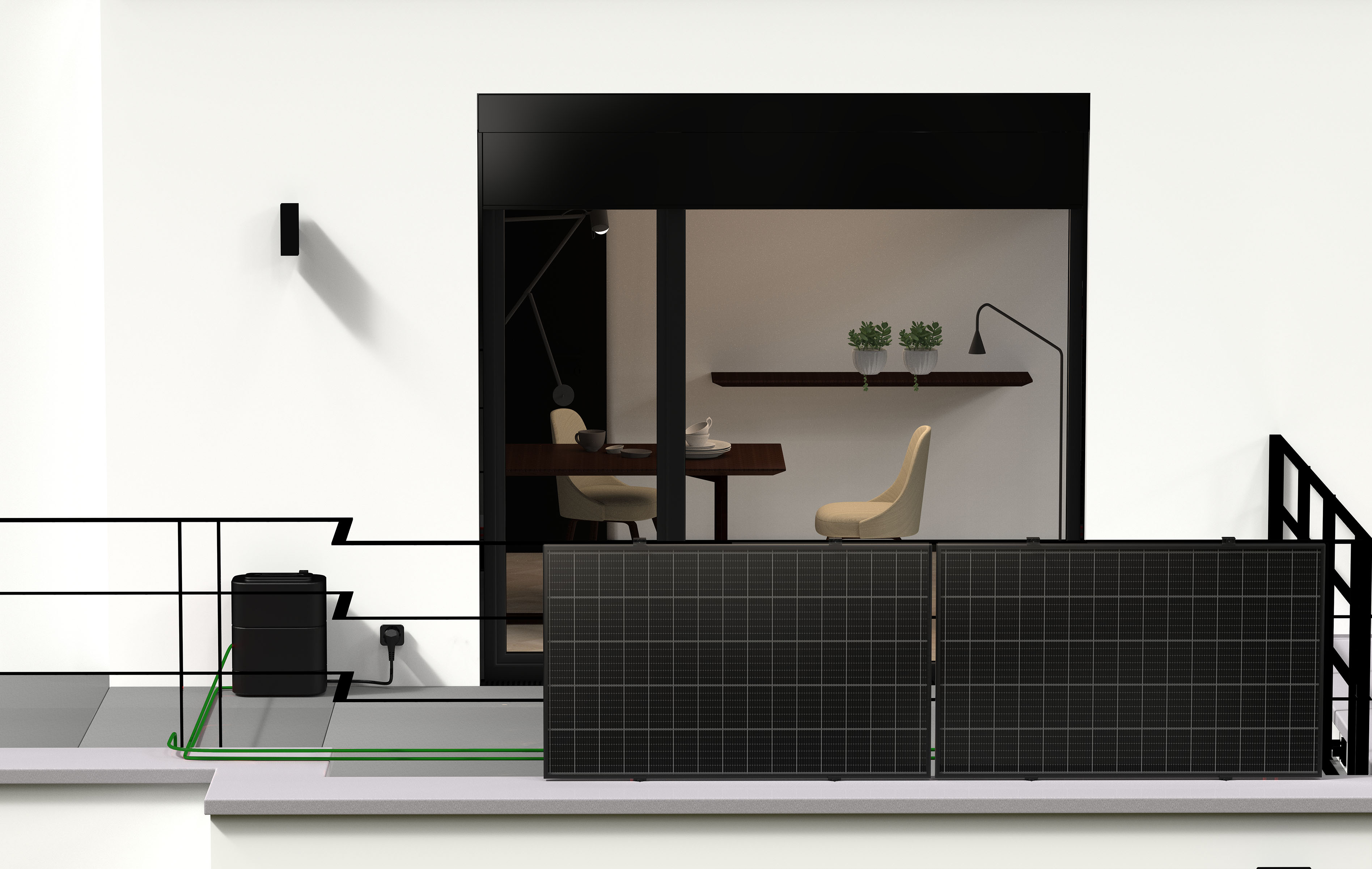
A balcony power plant with storage makes it possible to use self-generated solar power even when the sun isn't shining – be it in the evening, on cloudy days, or during periods of low sunlight. Without storage, the electricity is fed directly into the home's electrical grid and consumed immediately. Excess energy that isn't used is fed into the public grid – usually without any financial compensation for the operator.
With a battery storage system, however, self-generated electricity can be stored and used later. This increases the self-consumption rate, which has a long-term impact on electricity costs. Especially in households where electricity consumption does not occur exclusively during daylight hours, a storage system ensures significantly better energy efficiency.
Advantages of a balcony power plant with storage
✅ Higher self-consumption – Use more self-generated solar power instead of feeding it into the grid
✅ Independence from the grid operator – Less electricity purchased, more control over your own energy consumption
✅ Lower electricity costs – Storage reduces the need for expensive grid electricity.
✅ Energy for evening hours – Stored energy can also be used after sunset.
✅ Protection against rising electricity prices – The more self-generated electricity is used, the less noticeable price increases become.
The question, therefore, is not whether a storage system makes sense for a balcony power plant, but rather what size the storage system should be. The optimal battery capacity depends heavily on individual electricity consumption, the output of the solar panels, and the desired level of energy independence.
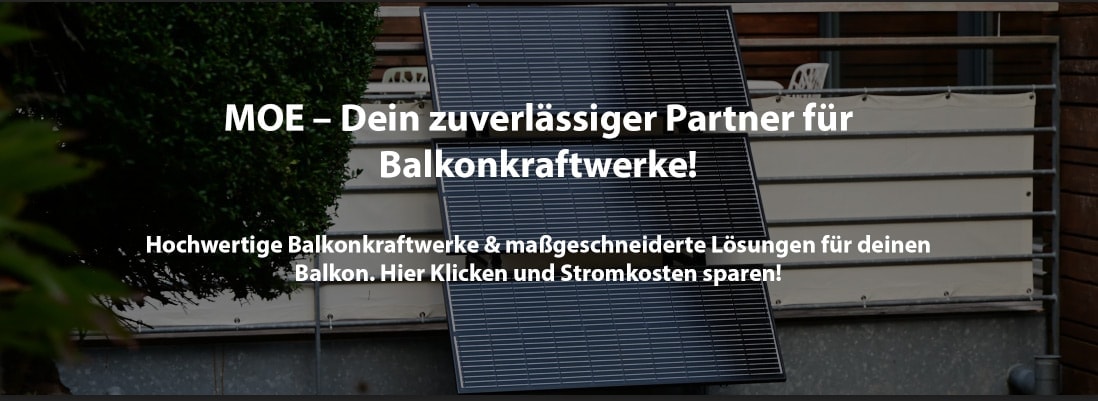
What storage capacities are available for balcony power plants?
Choosing the right storage size is crucial for the efficiency of a balcony power plant with storage . A battery capacity that is too small can result in insufficient solar power being stored for use in the evenings . Conversely, a storage capacity that is too large can lead to unnecessarily high purchase costs and may not be economically viable.
Common storage sizes and their applications
-
500 Wh – 1 kWh : Ideal for smaller households with a balcony solar power system up to 600 watts . These storage units are compact, inexpensive, and improve self-consumption , but are less suitable for covering the entire evening electricity demand.
-
1-2 kWh : A common choice for many balcony power plants . This storage size can store excess electricity from PV modules and ensures that a larger part of one's own electricity needs are covered by solar energy .
-
2–5 kWh : This capacity is attractive for households with higher self-consumption or a larger PV system . A storage system of this size can cover electricity demand for several hours, further reducing dependence on the power grid .
-
Over 5 kWh : Battery storage systems of this size are primarily intended for larger PV systems , as they can store a significant amount of energy. They are often oversized for a typical plug-and-play balcony system .
Comparison of storage capacities for balcony power plants
|
Storage size |
Suitable for |
Advantages |
Disadvantages |
|---|---|---|---|
|
500 Wh – 1 kWh |
Small households, balcony power plants up to 600W |
Compact, affordable, improves self-consumption |
Minimal evening electricity supply, limited capacity |
|
1 – 2 kWh |
Standard balcony power plants, higher self-consumption rate |
Storage of excess solar energy, increased self-sufficiency |
May not be sufficient for large consumers |
|
2 – 5 kWh |
High self-consumption, larger PV systems |
Power supply lasting several hours, less grid dependency |
High purchase costs, not necessary for everyone |
|
Over 5 kWh |
Large PV systems, mostly oversized for balcony power plants |
Large amounts of energy can be stored, but it is expensive and often inefficient. |
Very expensive, often inefficient for small balcony power plants |
Battery capacity vs. usable energy
Not every battery size corresponds to the actual usable energy output. Most energy storage systems do not fully discharge in order to extend battery life. Therefore, the actual usable capacity is usually 80-90% of the stated size.
Mini PV system or large storage solution?
The ideal storage size depends on how much electricity is consumed and needs to be stored daily. A mini-PV storage system with a small storage kit can already result in significant savings on electricity costs, while larger systems offer greater independence from the power grid.
The choice of the appropriate storage system should therefore always be based on individual consumption – a larger battery does not automatically mean more savings.
How do you calculate the ideal storage size for a balcony power plant?
Choosing the right storage size depends heavily on individual electricity consumption and the output of the PV system. A storage system should store as much excess solar power as possible without being oversized. An excessively large storage system means unnecessarily high purchase costs, while an undersized one fills up quickly, leaving the excess power unused and fed into the grid.
Base load of the household as a decisive factor
Base load refers to the average electricity consumption that occurs around the clock – for example, from devices such as Wi-Fi routers, refrigerators, or devices in standby mode. This load helps in calculating the appropriate storage system.
-
Low base load (below 200 Wh per hour) → storage size 500 Wh – 1 kWh is recommended.
-
Medium base load (200 – 500 Wh per hour) → storage size 1 – 2 kWh
-
High base load (over 500 Wh per hour) → storage size 2 – 5 kWh
Example calculation for different households
Here are some scenarios showing how much storage a household needs, depending on the size of the PV system, the base load and the desired level of self-sufficiency.
|
Household |
PV system |
base load |
Recommended storage size |
|---|---|---|---|
|
1-person household |
600 W |
150 Wh/h |
500 Wh – 1 kWh |
|
2-person household |
800 W |
250 Wh/h |
1 – 2 kWh |
|
3-4 people, high usage |
800 W+ |
500 Wh/h+ |
2 – 5 kWh |
How to optimize solar power and self-consumption
To maximize self-consumption, the storage system should be chosen to cover electricity consumption during the evening hours. The following factors play a role in this:
-
Orientation of the PV modules – Optimal yield with south or west orientation
-
Controllable consumers – using energy-guzzling devices specifically during sunny hours
-
System expansion – larger battery storage or additional PV modules
A well-dimensioned storage system for a balcony power plant ensures that as little electricity as possible remains unused and that electricity costs are sustainably reduced.

Comparison of different storage sizes
Choosing the right storage capacity depends heavily on individual electricity consumption and the output of the PV system.
Small storage systems with capacities from 500 Wh to 1 kWh are particularly suitable for households that only want to store and use a small amount of excess solar power. They are cost-effective and help to increase self-consumption, but are often insufficient to cover the entire evening demand.
Larger storage systems of 1 to 2 kWh offer greater independence from the power grid and make it possible to use a large portion of self-generated solar power even in the evening hours. They are a sensible choice for most balcony power plants, as they offer a good balance between purchase costs and savings.
Those seeking even greater energy independence can opt for a storage system with a capacity of 2 to 5 kWh . These systems store large amounts of solar energy, making it possible to access self-generated electricity even at night or on cloudy days. However, the initial investment costs are significantly higher, and not every household produces enough surplus energy to make such a large storage system economically viable.
A larger storage capacity doesn't automatically mean greater savings. The crucial factor is that the storage size matches the energy generated. Anyone wanting to make the most of their balcony power plant storage kit should consider both the output of the solar panels and their daily electricity consumption.
Is a larger storage capacity worthwhile in the long run?
Whether a larger battery storage system is worthwhile for a balcony power plant depends on several factors. Besides the purchase price, daily electricity generation, self-consumption, and electricity prices play a crucial role. A storage system that is too small cannot fully utilize the self-generated electricity, while a storage system that is too large is often not fully charged and incurs unnecessarily high costs.
A larger battery storage system offers particular advantages for households with high electricity consumption in the evening hours, as stored solar power can then be used when the PV system is no longer producing energy. Furthermore, a larger storage system can increase grid independence and protect against rising electricity prices.
From an economic perspective, a large storage system only makes sense if it is used optimally. Anyone who already owns or is planning to install a balcony power plant should therefore calculate precisely how much excess solar energy can be stored and whether the investment will pay off in the long run.
Frequently Asked Questions
How large should the storage capacity be for a balcony power plant?
The ideal storage size depends on individual electricity consumption and the output of the PV system. For a typical 600–800-watt balcony solar system, storage units with 1 to 2 kWh are often the best choice. Those with only a low base load who want to slightly increase their self-consumption can achieve good results with 500 Wh – 1 kWh. For greater independence from the grid, a 2–5 kWh storage unit can be worthwhile, although the initial investment costs also increase.
What are the benefits of an 800-watt balcony power plant with storage?
An 800-watt balcony solar power system with storage enables more efficient use of the generated solar power, as excess energy can be stored and used later. This increases self-consumption and reduces the need to draw electricity from the grid. In combination with a micro-inverter, the system can optimize electricity consumption and provide greater energy independence. Depending on the storage capacity, the stored electricity can be sufficient to power household appliances such as Wi-Fi routers, refrigerators, or lighting for several hours.
Is a storage system useful for a balcony power plant?
A balcony solar power system with storage is particularly worthwhile if the self-generated electricity isn't used immediately. Those who spend a lot of time at home during the day and run appliances directly on solar energy often don't need a large storage system. However, if the electricity is mainly used in the evening, a storage system can help increase self-consumption and reduce electricity costs. That said, a storage system also extends the amortization period, as it incurs additional purchase costs.
How long does a 1600-watt battery last?
The operating time of a battery storage system depends on its actual capacity and the energy consumption of the connected devices. For example, a 1600-watt storage system with a usable capacity of approximately 1.6 kWh can:
-
Operating a Wi-Fi router (10 W) for over 160 hours
-
To power a refrigerator (100 W) for approximately 16 hours
-
Let a television (150 W) run for about 10 hours
Depending on usage and energy requirements, the stored solar energy can therefore be sufficient for several hours or even an entire evening.

Leave a comment
This site is protected by hCaptcha and the hCaptcha Privacy Policy and Terms of Service apply.