

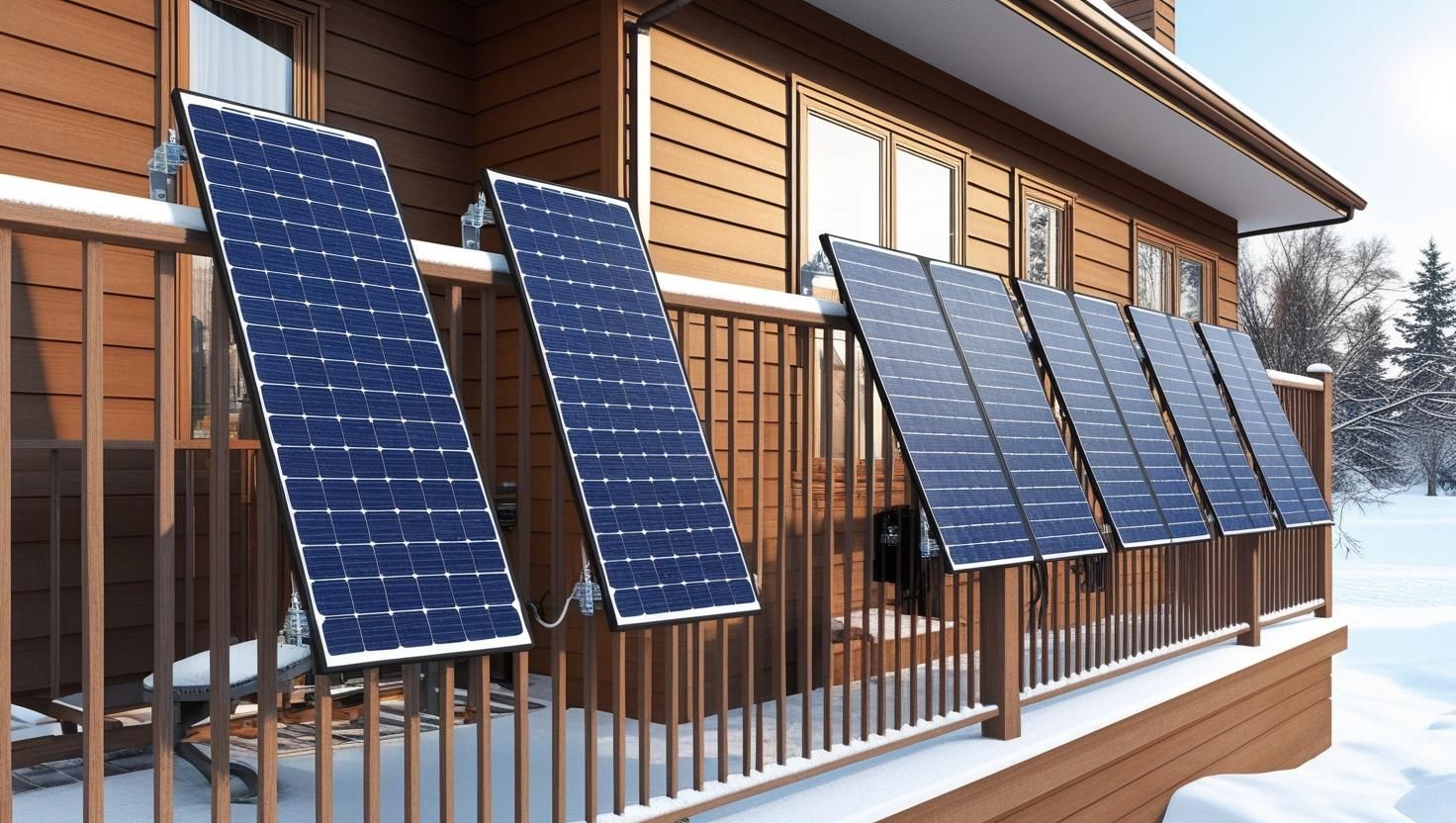
Spring, summer, autumn, and winter. The performance of your balcony power plant changes with the seasons. Winter presents balcony power plants with particular challenges and significantly impacts their output. Fewer hours of sunshine, low temperatures, and snowfall considerably affect electricity production. But does that mean a balcony power plant is useless in the colder months? Not at all! This article explains how the output of a balcony power plant behaves in winter and what measures can be taken to maximize electricity production.
How do balcony power plants work in winter?
Your balcony power plant uses photovoltaic technology to convert sunlight into electrical energy. Several factors are crucial here. Solar radiation is a key aspect, as it is weaker in winter due to the lower angle of the sun. At the same time, low temperatures affect the efficiency of the modules, as low temperatures have a positive effect on the performance of the photovoltaic cells. The orientation and tilt of the solar modules also play a central role, as they determine how much sunlight can be optimally utilized. Incorrect positioning can lead to a significant drop in yield during the winter.
The biggest challenges to yield on winter days
In winter, there are not only fewer hours of sunshine per day, but the sun is also lower in the sky. This means that the angle of incidence is less favorable, and photovoltaic systems capture less sunlight. Furthermore, snow and ice can further reduce energy yield. If snow completely covers the modules, they can barely generate any energy. Even a light layer of snow on the modules significantly reduces output because less light reaches the solar cells. Regular inspection and, if necessary, manual cleaning can remedy this.
Another factor is the cold season itself. While cold temperatures increase the efficiency of solar panels, this is often insufficient to compensate for the short days and weak sunlight. However, a well-designed system setup can help generate significant amounts of electricity even in winter.

How much power and electricity does a balcony power plant produce in winter?
The electricity production of a balcony power plant depends heavily on environmental conditions and solar irradiance. While an 800-watt balcony power plant can generate between three and four kilowatt-hours daily in summer, this amount drops drastically in winter. On a sunny winter day, you can expect around 0.5 to 1 kWh per day. However, this yield can be optimized through various measures.
Correct module alignment and regular surface cleaning can significantly increase energy yield. Choosing the right photovoltaic technology also plays a role. High-performance modules or bifacial modules, which can also utilize reflected light, are particularly advantageous in this regard.
Optimal alignment and tilt of the modules for winter
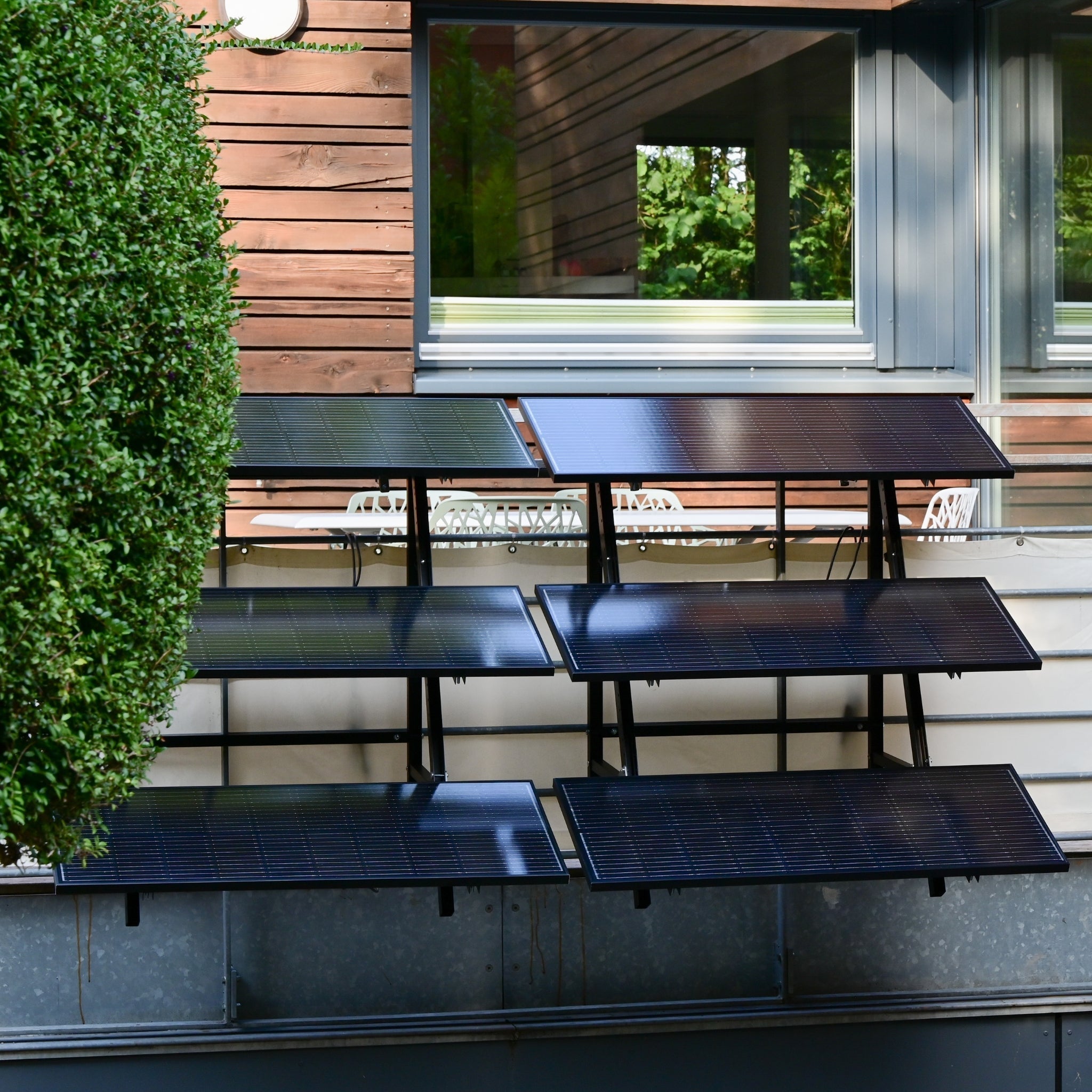
Choosing the right orientation can make the difference between a low and a solid winter yield. A south-facing orientation is considered ideal, as it maximizes solar radiation. However, the tilt angle of the modules must also be adjusted. While a relatively shallow angle is sufficient in summer, the modules of such a plug-in solar system should be installed at a steeper angle in winter. A tilt angle of 50 to 60 degrees significantly improves light absorption and simultaneously prevents excessive snow accumulation, as it can slide off more easily.
The influence of snow and ice on electricity generation

Snow and ice can be both a hindrance and an advantage for solar panels. A continuous layer of snow on the panels drastically reduces their yield, as sunlight no longer reaches the solar cells. At the same time, snow lying on the ground can reflect sunlight, thus improving the panels' power generation.
This reflective effect can be used to advantage by placing modules in a bright, snowy environment. To prevent snow loss, it is recommended to clean the modules regularly or to use special coatings that prevent snow from adhering.
How do temperatures affect the efficiency of solar modules?
Many people believe that solar panels perform worse in cold weather. In fact, the opposite is true. Low temperatures improve the performance of photovoltaic cells, as they operate more efficiently than in high temperatures. This means that a balcony power plant can still produce a good amount of electricity even in winter, despite the lower levels of sunlight – provided there are enough hours of sunshine.
Sunlight in winter: How important is the right location?

The positioning of the solar panels is a crucial factor for energy yield. An unshaded location is essential to utilize every available hour of sunlight. Reflected light from snow or bright surfaces can also help maximize light output. Depending on the surroundings, it may be advantageous to place the balcony power plant in a location with direct sunlight to achieve the best possible yield.
Cleaning and maintenance for maximum yield
Regular maintenance of balcony power systems is essential to ensure optimal energy yield. Dirty or icy modules produce less electricity. Therefore, snow or ice should be carefully removed without damaging the modules. Additionally, inverters and connectors should be regularly checked for moisture and damage to guarantee long-term efficiency.
Tips for better use of balcony power plants in winter
The use of a balcony power plant in winter can be optimized through a few targeted measures. Choosing 800-watt modules is particularly helpful, as they allow for a higher energy yield even with low levels of sunlight.
Furthermore, the correct orientation is crucial to utilize the maximum amount of solar energy. A steeper tilt and a south-facing location can significantly improve the yield. The reflection of sunlight by snow can also be strategically used by placing the modules in an open, bright environment.
Tips that can significantly improve yields in winter:
✅ Regular cleaning of the solar panels – Snow and ice should be removed, as even a thin layer can significantly reduce energy production. A soft brush or broom is suitable for carefully removing snow from the panels.
✅ Optimize southern orientation – A south-facing orientation is particularly advantageous in winter, as it makes optimal use of the low-angled sun. If you have the option to flexibly adjust the module orientation, you should choose a steeper angle in winter.
✅ Use bifacial modules – These special solar modules can also absorb reflected light from snow or bright surfaces, which noticeably increases the yield.
✅ Create bright areas in the surroundings – If possible, light surfaces (e.g. white surfaces or reflective films) can improve the light yield.
✅ Consider battery storage – Since the sun sets earlier in winter, a storage system can help make the generated electricity usable for the evening hours.
✅ Avoid shading – Because the sun is lower in the sky in winter, even small obstacles like trees or buildings can shade the modules more than in summer. Regularly checking the location helps to maximize yield.
✅ Combine plug-in solar systems with intelligent inverters – Modern inverters optimize energy conversion, even when solar radiation is weaker.
Alternative concepts: Combined solutions for more solar power in winter
Besides traditional balcony power plants, there are also alternative concepts that can increase yield in winter. Some specialized modules are designed to achieve better performance even in diffuse light conditions. In combination with other technologies, a balcony power plant can even help reduce heating costs. The use of battery storage is particularly effective, as it stores the electricity produced during the day and makes it available in the evening.
The future of balcony power plants in cold seasons
Technological development in the field of photovoltaics is progressing continuously. New innovations will ensure that balcony power plants operate even more efficiently in the future – even during the winter months. High-performance modules and optimized storage systems will make it possible to utilize self-generated electricity even more effectively. The market for balcony power plants will also see significant developments, as the increasing demand for sustainable energy solutions is further driving the expansion of the technology.
Conclusion: Is a balcony power plant worthwhile even in winter?
Although the winter months reduce the yield of a balcony power plant, it remains a worthwhile investment. Through strategic placement, regular maintenance, and choosing the right technology, a significant amount of solar energy can be generated even in winter, thus lowering your electricity costs. With future developments in photovoltaic technology, efficiency will continue to increase, making balcony power plants a sustainable energy source for the entire year.
Frequently asked questions on this topic:
How can I optimize the yield of my balcony power plant in winter?
A steeper tilt of the PV modules (50–60°), southern orientation , regular snow removal and reflective surfaces such as snow can increase the yield.
Does snow on the modules significantly affect electricity production?
Yes, a solid layer of snow and ice can reduce yield to almost zero. However, a light layer of snow can often melt on its own due to sunlight. Removing the snow is best for performance.
Should I use a battery storage system for my balcony power plant for the winter?
A storage system can be useful, because it allows you to not only generate electricity during the day, but also store the electricity and use it in the evening.

Leave a comment
This site is protected by hCaptcha and the hCaptcha Privacy Policy and Terms of Service apply.