

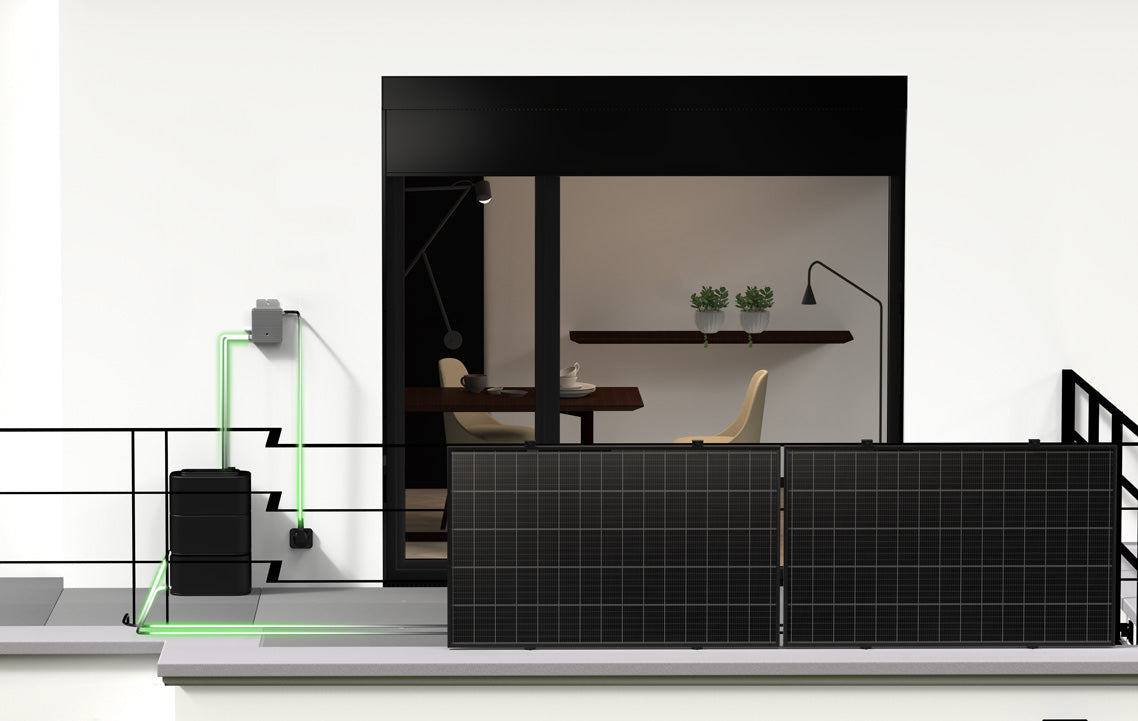
More and more households are opting for balcony power plants to generate their own electricity with solar energy and reduce their electricity costs . But how does a balcony power plant work? We explain in detail how such a mini PV system functions, which components are required, and how the generated solar power is fed into your home's electrical grid.
The most important components of a balcony power plant
Solar modules – the “skin cells” of the system

Solar panels are the central element of a balcony power plant, as they are responsible for converting sunlight into electrical energy . They consist of many individual solar cells that generate electricity through the photoelectric effect .
-
The performance of a solar module depends on several factors, including the quality of the solar cells , the size of the modules , the orientation to the sun , and the weather conditions .
-
A balcony power plant with 800 watts of power is now legally permissible and enables efficient feed-in to the house grid .
Micro-inverters – the heart and brain of the system

The micro-inverter is an essential component of a balcony power plant, as it converts the direct current (DC) generated by the solar panels into alternating current (AC) . Household appliances and the home's electrical grid operate on AC, which is why this step is necessary.
-
Micro-inverters are mounted directly on the solar modules, so each module has its own inverter. This makes them particularly efficient, as shade or dirt on one module does not affect the entire mini-PV system.
-
In comparison, a central inverter uses only a single conversion station for multiple modules, which can reduce performance if one module receives less sunlight.
-
Modern micro-inverters have an efficiency of over 95% , which means that almost all of the solar energy gained is converted into usable alternating current.
-
Anyone wishing to receive a feed-in tariff must ensure that the inverter meets the current technical grid protection guidelines .
Connection and cabling – The veins

In order for the generated solar power to be used in the house, it must be fed into the house network via suitable cabling .
- Installing a balcony power plant is particularly easy, as it is designed to operate via a standard electrical outlet . The generated electricity is fed directly into the existing household electrical system and used from there by the connected devices.
Two types of connectors are available for the connection:
- Schuko plug : The standard household socket that allows for simple plug-and-play installation . In Germany, this solution is still permitted, but in some cases it is supplemented by safer alternatives.
- Wieland connector : A specially secured connector type that ensures standards-compliant grid feed-in and protects against unwanted backflow . It is often recommended by grid operators, especially when feeding power into the public grid is desired.
A balcony power plant can thus be integrated directly into the house network without the need for costly modifications.
The basic operating principle of a balcony power plant
A balcony power plant is a mini solar system specifically designed for self-consumption of electricity. Its main function is to convert sunlight into electrical energy, which is then fed directly into the household. This technology is also used in larger photovoltaic systems on roofs or in solar parks, but here on a smaller scale for private use. What happens during this process, and how do these mini photovoltaic systems work? Well, let's start with that...
The first step - From sunlight to electricity
The functionality begins with the Solar panels are mounted on balconies, terraces, or other suitable surfaces. These panels consist of many small solar cells that absorb incoming sunlight and convert it into electrical energy. This process initially generates direct current (DC).
-
Solar modules consist of photovoltaic cells based on silicon, which generate electricity through the photoelectric effect. This effect occurs when sunlight strikes the surface of the solar cells and photons – light particles – collide with the material. These photons transfer their energy to the electrons in the silicon, causing them to be dislodged from their original position and set in motion.
- Because solar cells consist of multiple layers of special semiconductor materials , an electric field is created that directs the moving electrons in a specific direction. This generates an electrical voltage, which in turn produces a direct current (DC). However, this current is not directly usable, as most household appliances and the mains electricity supply operate on alternating current (AC). Therefore, a micro-inverter is used to convert the direct current into alternating current.
The stronger the sunlight, the more power the mini solar system can deliver. This is because higher sunlight intensity means more photons hit the solar cells. This releases more electrons, resulting in higher electricity generation.
- However, the performance of a balcony power plant does not depend solely on solar radiation. Factors such as the orientation of the solar panels, their tilt angle, the ambient temperature, and the quality of the solar panels also play a role.
Monocrystalline solar modules, for example, have a higher efficiency than polycrystalline modules because they have a more uniform crystal structure and absorb sunlight better. Furthermore, high temperatures can reduce the performance of the modules because the electrical resistance in the material increases.
The power output depends on several factors, including:
- The orientation of the modules to the sun: A southern orientation is optimal, as this is where the solar radiation is highest.
- Weather conditions : On cloudy days, performance can be greatly reduced because less direct sunlight hits the modules.
- The efficiency of the mini photovoltaic system also depends on the structure of the solar modules: High-quality monocrystalline modules have a higher efficiency than polycrystalline modules because they have a more uniform structure and a higher light absorption capacity.

Then the micro-inverter comes into play - converting direct current into alternating current.
The generated electricity is initially direct current (DC), but most household appliances require alternating current (AC). This is where the inverter comes into play:
-
The micro-inverter converts direct current (DC) into alternating current (AC) so that it can be used in the household electrical system. This conversion is essential because household appliances rely on alternating current direction, which would be incompatible with DC.
- The inverter also optimizes power production and adjusts the output to the prevailing conditions. Modern inverters feature MPP (Maximum Power Point Tracking) technology , which ensures that the solar cells always operate at their optimal power output.
- Micro-inverters have the advantage of operating separately for each solar module, meaning that a shaded or underperforming module won't negatively impact the entire system. A central inverter, on the other hand, would have the disadvantage that a single poorly performing module could drag down the entire system.
Finally, the electricity is fed into the house's electrical grid – this is how the electricity flows.
Once the alternating current has been generated, it is fed into the house network via a socket .
- Balcony power plants are plug-in solar systems and are simply plugged into a suitable household socket using a Schuko plug or a special Wieland plug .
- Once the solar panel has supplied power and it is available in the home's electrical system, it is used primarily for self-consumption before drawing power from the public grid. This means that appliances such as refrigerators, televisions, and Wi-Fi routers will use solar power first before resorting to grid electricity.
- If more electricity is produced than consumed, the surplus flows into the public grid . In such a case , combining it with astorage unit would be the optimal solution . This way, you don't lose any generated electricity, can store it, and then use it when you need it.

Use of the generated electricity – self-consumption or feed-in?
- The generated electricity can be used immediately for household appliances such as refrigerators, washing machines, or computers . Since these appliances often run continuously, a significant portion of the electricity can be consumed directly.
- By using the electricity directly, you reduce your reliance on the public grid, which leads to lower electricity costs. However, you are also giving away any surplus electricity you produce.
If the system produces more electricity than is currently needed, the balcony power plant feeds the excess into the public grid. Here, you can either consider the possibility of a feed-in tariff or, as mentioned above, store the excess electricity in a battery and then use it when your mini PV system is producing less power.
This happens, for example, in the evening hours or in bad weather, simply when the sun itself shines only slightly or not at all.
Differences between self-consumption and feed-in
Use for own consumption (no feed-in tariff)
- Network operator registration is no longer required.
- Only registration in the market master data register of the Federal Network Agency is required.
- Electricity is preferably used for self-consumption ; surplus electricity is fed into the grid without compensation.
- Zero feed-in can be a very attractive incentive compared to feed-in tariffs.
Use with feed-in tariff (feed-in to the public grid)
With intentional and compensated feed-in, you receive a certain amount per kWh. However, certain prerequisites are required.
- Registration with the network operator
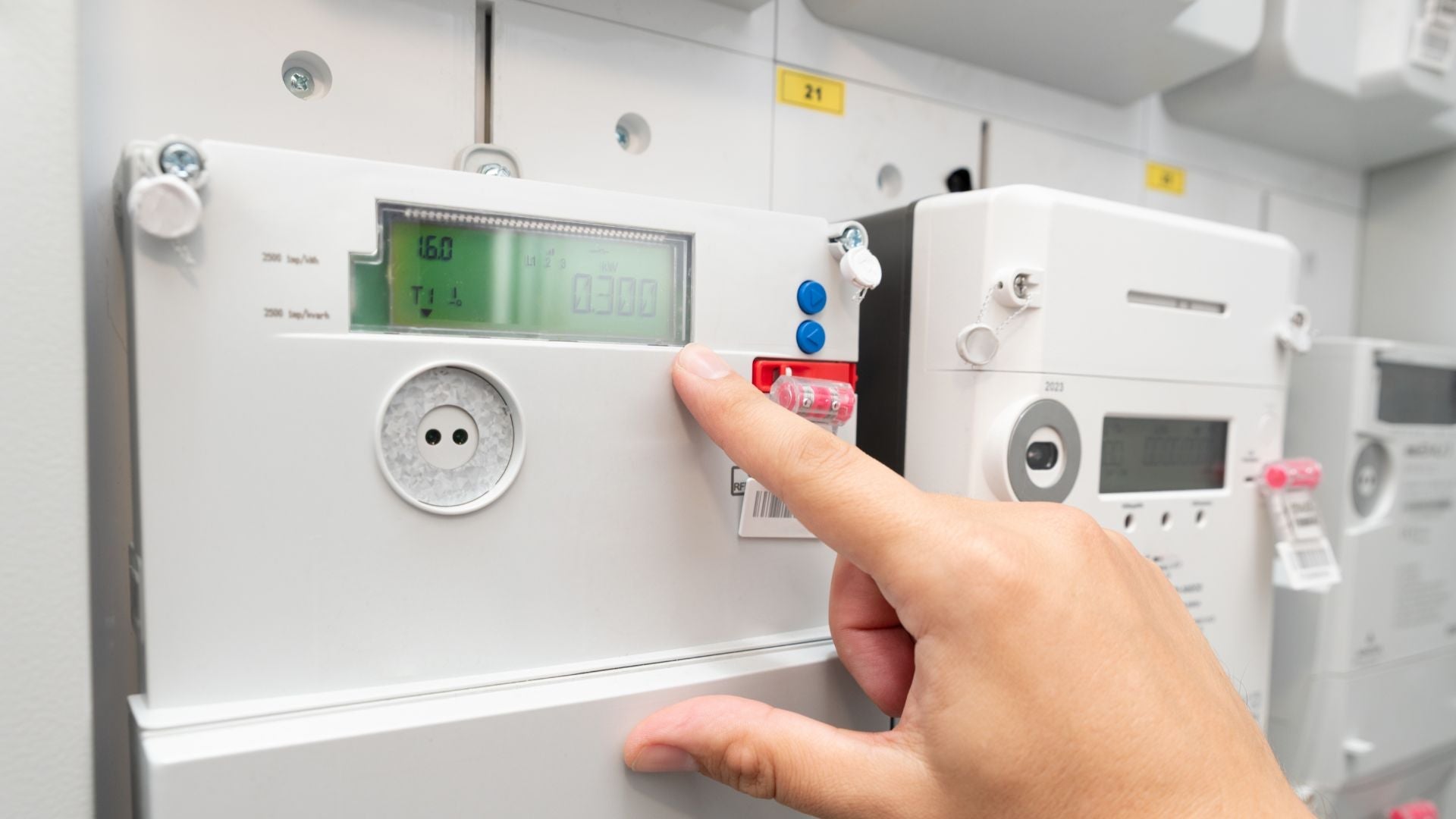
- Installation of a bidirectional meter is necessary (records the amount of electricity fed into the grid)
-
Remuneration rates since February 2024:
- 8.11 cents/kWh for partial feed-in
- 8.51 cents/kWh for full feed-in
- From August 2024, the rates have decreased slightly to 8.03 cents/kWh and 8.42 cents/kWh respectively.
What happens to the power output in bad weather or at night?
- On cloudy days or during the winter months, the performance of the solar system is reduced because less sunlight hits the solar modules.
- The balcony power plant will then produce less electricity, but can still contribute to reducing electricity consumption .
-
No solar power is generated at night , which is why electricity is drawn from the grid or a power storage system is used.
Installing a balcony power plant – step by step
Where can a balcony power plant be installed?
- Balcony railings on balconies, roofs, terraces, or gardens are possible locations. Choosing the right spot is therefore crucial.
- The orientation should face south to achieve the best performance .
Installation of the solar modules
- Secure attachment to railings or stable surfaces.
- Optimal inclination for maximum energy production.
Electrical connection – How safe is the socket?
- Most balcony power plants are simply connected via a plug .
- Direct power supply via a Wieland socket is recommended.
Legal requirements for balcony power plants (as of 2024/2025)
The operation of a balcony power plant in Germany is clearly defined by legal regulations. The Solar Package 1 , passed in May 2024 , introduced some simplifications and changes .
Power limit increased to a maximum of 800 watts since 2024
Until 2023, the maximum feed-in power for plug-in solar systems was limited to 600 watts . Since 2024, this limit has been raised to 800 watts inverter power , allowing operators to use more. Generating solar power for one's own household.
- The module power (i.e., the total power of the installed solar modules ) may be up to 2,000 watts , as modern micro-inverters now work more efficiently and can process more solar energy.
- By increasing the power output to 800 watts, mini-PV systems can contribute even more to reducing electricity costs and optimizing self-consumption.
Registration and network connection
- Registration with the Federal Network Agency's market master data register is still required. This applies to all mini solar power systems, as they must be registered as part of the public energy system.
-
Network operator registration:
- Since 2024, registration with the grid operator is no longer required for self-consumption. This means that users can easily install and operate their mini-photovoltaic systems.
- However, anyone planning to feed electricity into the public grid to receive a feed-in tariff must still register their balcony power plant with the grid operator. In this case, a bidirectional meter is also required.
Meter change
Electricity meter : If an old Ferraris meter without a backstop is still in use, it must be replaced with a modern one.
Want to learn more about the legal situation? You can read about it here .
What savings potential can you expect from a balcony solar system?
One thing is clear: the main factor for you is reducing your electricity costs through self-consumption. With Moe, you can save up to €552 on electricity costs per year. Here's a sample calculation (including battery storage):

Payback period depending on electricity price: 4.7 – 5.4 years.
Balcony power plants by Moe
A balcony power plant is a simple way to generate your own electricity and reduce your electricity costs. It's easy to use, and installation is even possible for renters . By using the generated electricity yourself, you can reduce your reliance on the grid, which pays off financially in the long run.
Use solar power now and become part of the energy transition!
Frequently asked questions on the topic: How does a balcony power plant work?
How safe is the operation of a balcony power plant?
Very safe, provided the installation is carried out correctly, according to the manufacturer's instructions or by a qualified professional. Modern inverters meet all grid protection requirements and prevent overloading.
Can I, as a tenant, use a balcony power plant?
Yes, tenants are also allowed to operate a balcony power plant. However, it is advisable to obtain the landlord's consent before installation – especially if it is to be permanently mounted on the balcony railing.
Can I use a balcony power plant in winter?
Yes, a balcony power plant also produces electricity in winter . However, the output is lower because the hours of sunshine are shorter and the solar radiation is weaker.
Are there subsidies available for balcony power plants?
Some German states and municipalities offer subsidy programs for balcony power plants. It's worth checking with your local city or town council about available grants.


Leave a comment
This site is protected by hCaptcha and the hCaptcha Privacy Policy and Terms of Service apply.